
UPS for Colleges & Universities
A college or university runs like a small city: data centers and research computing, hundreds of network closets, residence halls, labs, a medical center, athletics venues and campus security. Each needs power protection sized to its job.
Xtreme Power UPS systems are deployed across many U.S. college and university campuses, from compact lithium units in classrooms to modular three-phase systems in campus data centers. For K-12 districts, see UPS for schools.
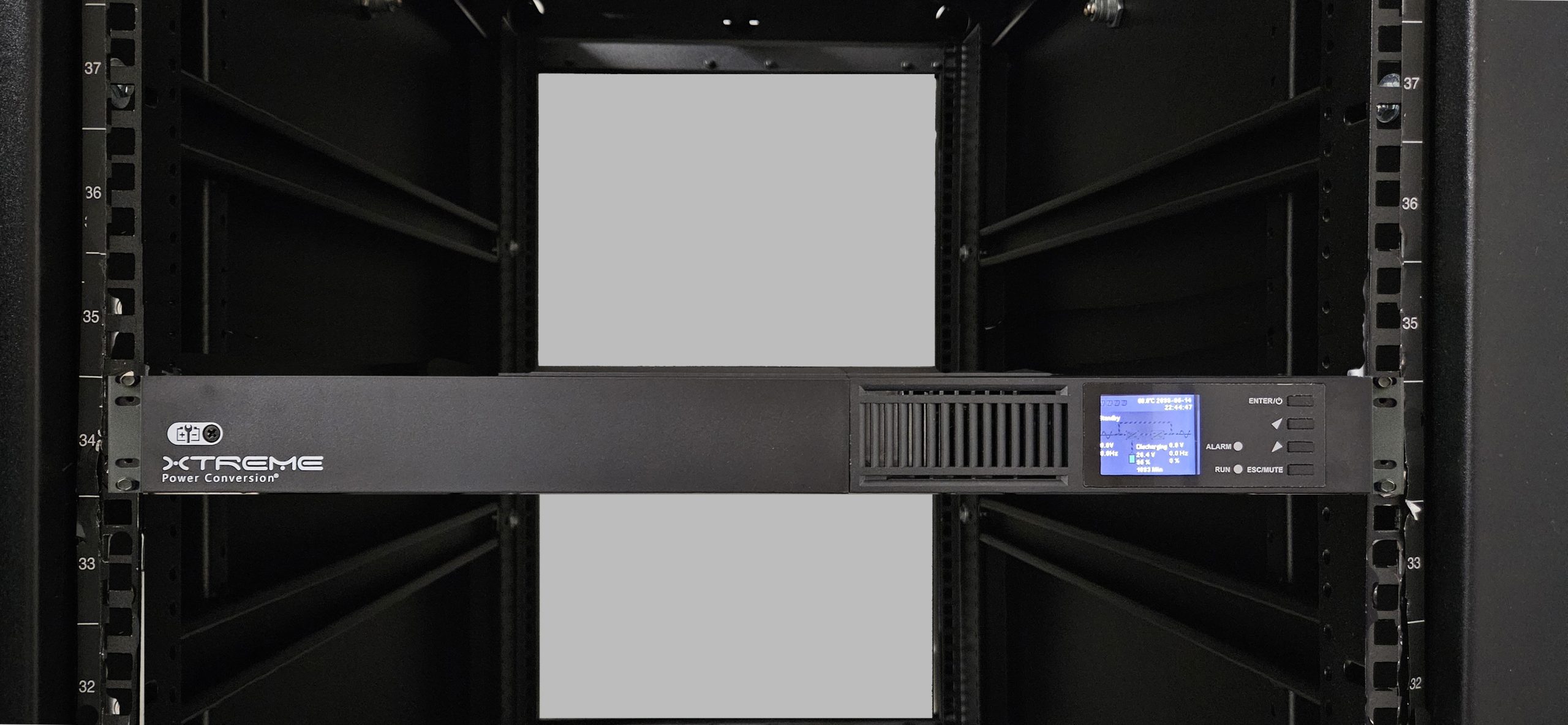
Where colleges and universities need UPS
Typical deployments and sizing on a college or university campus:
| Campus Area | Typical Equipment Protected | Typical UPS Size | Notes |
|---|---|---|---|
| Campus data centers & research computing | Servers, storage, HPC and GPU clusters, core network | 10 kVA to 140 kVA+, three-phase | Modular, N+1, concurrent maintenance |
| Network closets (IDF / MDF) | Switches, routers, firewalls, PoE, Wi-Fi controllers | 1–3 kVA | Standardized across buildings; often with smart PDUs |
| Residence halls | Building switches, Wi-Fi, access control, cameras | 1–3 kVA | Dense closets, remote reboot, warm spaces |
| Research labs & instruments | Analyzers, microscopes, lab PCs, data acquisition | 1–10 kVA | Clean, isolated power; long ride-through |
| Academic medical centers | Imaging, clinical IT, lab systems | 3 kVA to three-phase | See healthcare and imaging guidance |
| Classrooms & lecture halls | AV systems, lecture capture, displays, PCs | 350 VA–1 kVA | Compact, silent, wall or cart mount |
| Security & public safety | IP cameras, NVRs, access control, emergency phones | 750 VA–3 kVA | Keeps recording and doors working |
| Athletics & event venues | Stadium networks, scoreboards, broadcast, ticketing | 1 kVA to three-phase | High-visibility, event-day uptime |
Campus data centers and research computing
Research computing grows in steps, as grants fund new clusters. Modular three-phase UPS lets the power system grow with it, and N+1 power modules with a maintenance bypass let you service the UPS without taking compute down.
- X90 and M90C modular three-phase UPS for campus data rooms
- Li90 three-phase lithium, 10–30 kW with batteries inside one 12.6 in cabinet (not TAA compliant; see below)
- Ai90 rack-integrated UPS for high-density AI and HPC rows (early 2027)

Clean power for labs and instruments
Analytical instruments, microscopes and data-acquisition systems can be sensitive to electrical noise and ground issues, and an outage mid-run can cost days of work. An isolation UPS such as the TX91 combines online double conversion with an isolation transformer, and runtime can be sized to protect the run or allow a controlled stop.
Network closets and residence halls
Residence halls and academic buildings put hundreds of closets on one network, many of them warm and hard to reach. Lithium UPS rated to 50 °C cuts battery replacements, and remote outlet control lets IT reboot a hung switch or access point without a trip across campus.
- J90 1U online lithium UPS with switchable outlets
- Short depth rack UPS for wall cabinets
- Smart PDUs for outlet-level metering and remote reboot
- UPS for IDF and MDF closets and wireless access points
UPS that fits older campus buildings
Many campus buildings were designed decades before today’s IT loads. Electrical rooms are tight, closets are shallow and some network gear lives on a wall. Lithium shrinks the footprint, and several Xtreme Power models are built for exactly these spaces.
| Space problem | Fit | Why it works |
|---|---|---|
| Small electrical room, no space for battery cabinets | Li90 three-phase lithium | 10, 20 or 30 kW with batteries inside one 12.6 in wide cabinet; no external battery cabinets |
| Shallow wall cabinet | J60C · V70 · P91-1kLi | J60C lithium at 8.5 in deep; V70 at 9.0–10.5 in, 700–1500 VA (lead acid, ships January 2027); P91-1kLi online lithium at 10.6 in rack depth (ships November 2026) |
| No rack at all | J60 · J90 | Wall mount: the J60 is about 1.25 in thin; the J90 mounts on its wall brackets |
| Rack space is full | J90 | Up to 3 kVA online lithium in 1U |
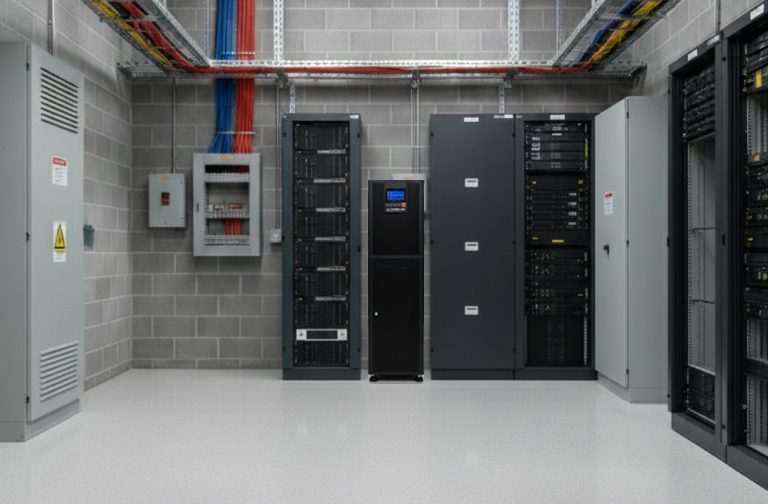
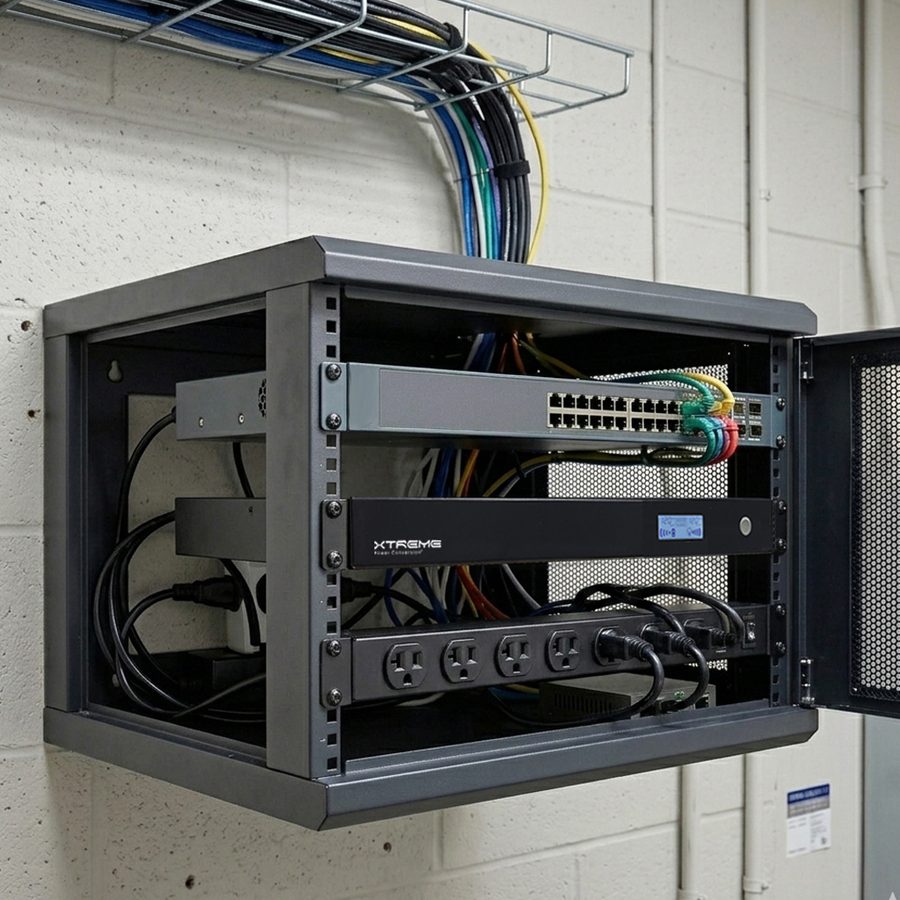
See all options by depth on the short depth rack UPS page, or the Li90 30 kW retrofit page.
UPS platforms for higher education
| Campus Area | Recommended Series | Why |
|---|---|---|
| Data centers & research computing | X90 · M90C · Li90 · Ai90 (early 2027) | Three-phase, modular N+1, lithium options, rack-integrated high density |
| Network closets & residence halls | J90 · P91 Li · Smart PDUs | 1U/2U online lithium, remote outlet control, monitoring |
| Research labs & instruments | TX91 isolation UPS · P91 Li | Isolated, conditioned power for sensitive instruments |
| Classrooms, AV & security | J60 · J60C · J90 | Compact, fanless lithium; short depth for AV racks |
Related: UPS for medical imaging · UPS for security cameras · How to choose a lithium UPS · UPS battery architecture
Buying for a college or university
Higher-education UPS is usually funded from capital, IT or research project budgets and bought through campus procurement, resellers or cooperative contracts. E-Rate does not apply to colleges and universities.
Federally funded research and TAA
Much university research runs on federal money, and that can bring federal purchasing rules with it. The Trade Agreements Act applies to federal procurement contracts (FAR 52.225-5), so equipment bought under a federal research contract, or at a university-managed federal lab, may need to be TAA compliant. Purchases under federal grants generally follow the Uniform Guidance (2 CFR 200) instead, which encourages domestic-preference purchasing. The terms of each award decide which applies, so check with your sponsored programs office.
Xtreme Power single-phase UPS, the M90C and X90 three-phase families, and SPDU smart PDUs are manufactured in Taiwan, a TAA-designated country, and we supply country-of-origin documentation at quotation. The Li90 is not TAA compliant; for TAA-required three-phase projects, specify the M90C or X90.
Colleges & universities: frequently asked questions
What UPS do colleges and universities need?
Does E-Rate cover UPS for colleges?
What UPS works for research labs and instruments?
Why lithium UPS for a campus?
Do federally funded research projects require TAA-compliant UPS?
Are Xtreme Power UPS TAA compliant?
What UPS fits an older building with little space?
What about campus data centers and HPC?
Can we standardize across a whole university?
Plan power protection across your campus
Our engineers can help standardize platforms across buildings, size data center and lab systems, and coordinate with your procurement process.