

P91 5–10kVA Online UPS – 208–240V Rack UPS with Scalable Runtime
5–10 kVA | 208–240 VAC | Online Double Conversion
Centralized rack UPS platform engineered for distributed infrastructure requiring scalable runtime, integrated bypass capability, and predictable performance across IT, telecom, and industrial environments.
5–10 kVA · 208–240 VAC · Online Double-Conversion UPS · Scalable Runtime
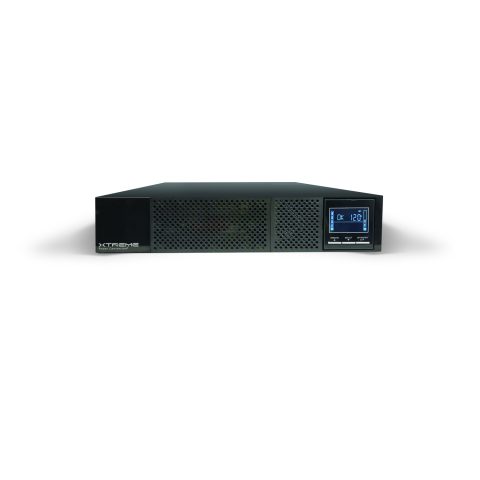
P91 5–10 kVA external-battery online UPS
The P91 5–10 kVA Series is a scalable-runtime online double-conversion rack UPS built around external VRLA battery modules — runtime is engineered per deployment rather than fixed by internal capacity. It combines the UPS, external battery cabinets, and optional XBDM bypass/distribution into one coordinated architecture, with unity power factor for full real-power output and an optional transformer for 240/120 V. It is TAA compliant (UL / cUL listed; CE / RoHS) for federal, education, and public-sector procurement. For the compact tier, see the P91 1–3 kVA.
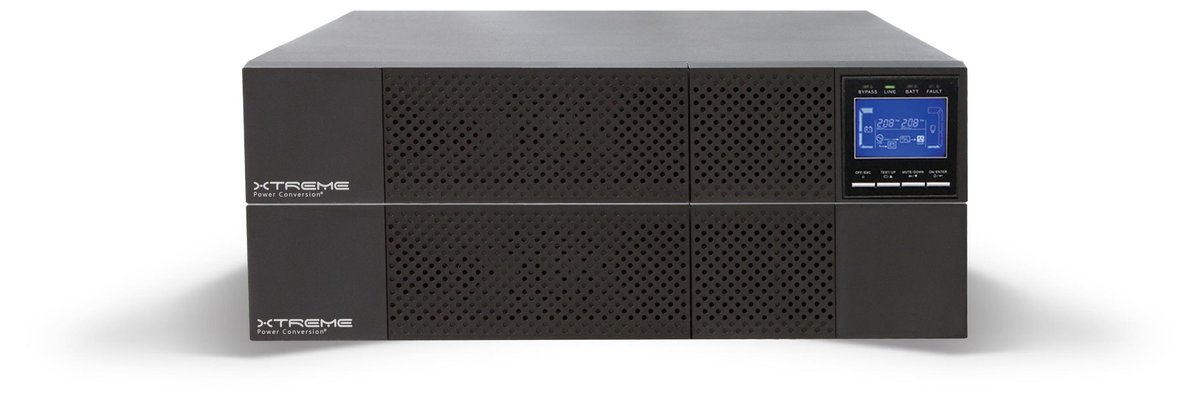
External-battery rack UPS with scalable runtime
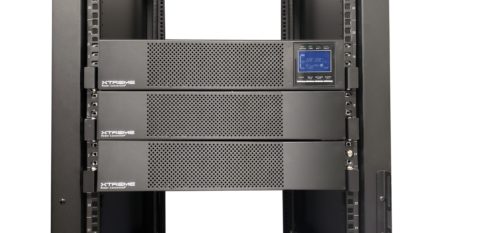
The P91 5–10 kVA combines the UPS module, external battery cabinets, and optional bypass distribution into a single coordinated architecture — simplifying installation and supporting consistent deployment across multiple sites. Built around external battery expansion, runtime is engineered to application requirements rather than fixed internal capacity. Online double-conversion topology continuously conditions incoming power and maintains zero transfer time during outages, supporting both short ride-through and extended-runtime strategies within one platform.
What the P91 5–10 kVA delivers
Zero transfer time and continuous conditioning at <4% THD full load; programmable output voltage and frequency for global requirements.
Hot-swap external battery modules (BPXR2U240A / BPXR3U240A) scale runtime from minutes to extended durations without interrupting the load.
Full real-power output (kW = kVA) supplies more usable capacity to high-density IT and industrial loads without derating.
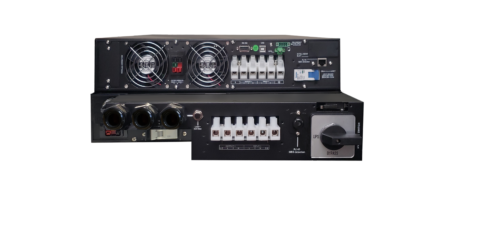
An optional XBDM module adds input/output distribution and a maintenance-bypass switch, with each output receptacle protected by its own breaker.
An optional step-down isolation transformer — most often the XPD-IT60A — converts the 208/240 V output to isolated 120 V (and 240/120 V split) for downstream loads.
ECO-mode operation reaches up to 99% efficiency (94% online), lowering energy use and heat, backed by a $50,000 load-protection policy.
The scalable-runtime tier
The P91 5–10 kVA operates as the higher-capacity rack UPS tier within distributed power architecture, bridging compact rack UPS systems and facility-level infrastructure. It is typically deployed within equipment racks or electrical rooms, in multi-site infrastructure requiring standardized design, and upstream of rack-level distribution and control.
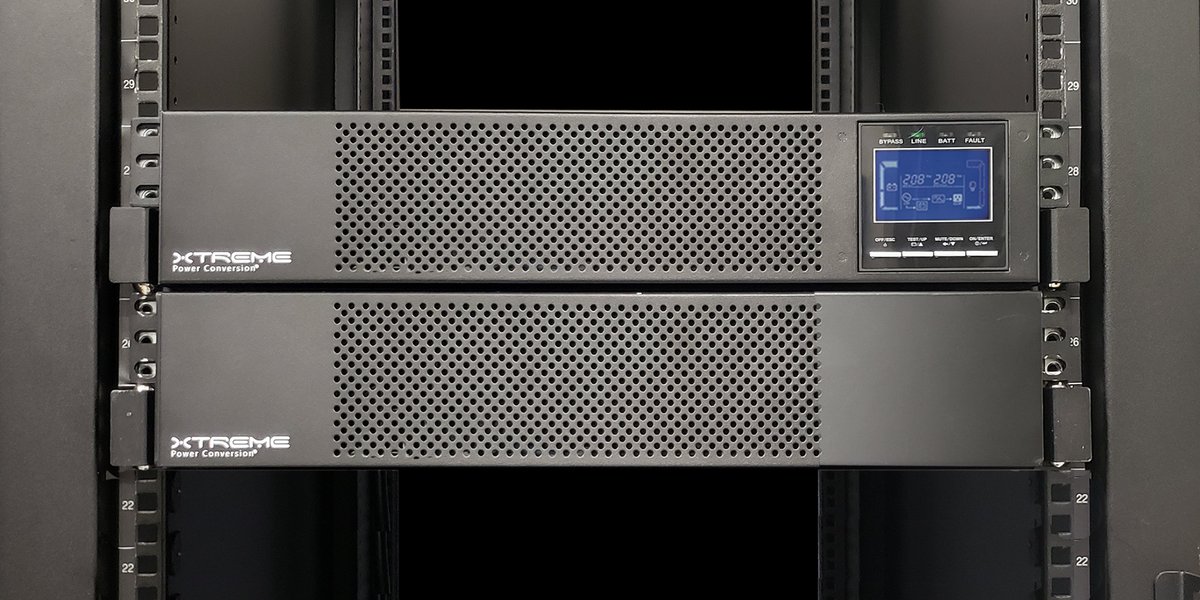
Choose the P91 5–10 kVA for engineered external-battery runtime and lowest upfront cost; step up to lithium (P91 Li, J90, or facility-level Li90) for reduced maintenance and longer lifecycle, or down to the P91 1–3 kVA for compact per-rack deployments.
VRLA or lithium?
The P91 5–10 kVA is a VRLA-based platform optimized for runtime scalability and predictable lifecycle performance — selected when runtime flexibility and external-battery architecture are prioritized over lithium lifecycle advantages. Lithium platforms such as the P91 Li, J90/J90i, and facility-level Li90 prioritize reduced maintenance and longer lifecycle. Both deliver full-time online conditioning.
Replace legacy 5–10 kVA rack UPS
The P91 is commonly deployed as a replacement for legacy rack-mounted UPS platforms — APC Smart-UPS SRT 5/6/10 kVA, Eaton 9PX 5–10 kVA, and Vertiv Liebert GXT systems — providing a modernization path with scalable runtime architecture, integrated bypass capability, and improved deployment consistency across sites.
P91-5K vs the field at 5 kVA
The differences are clearest at a single capacity. Here is the P91-5K against the 5 kVA online platforms it most often replaces, using the configurations detailed in the per-model comparisons. The 6 and 10 kVA matchups follow the same pattern — full breakdowns are in the comparison hub.
| Feature (5 kVA) | Xtreme P91-5K | APC SRT5KRMXLT | Eaton 9PX5KG2 | Vertiv GXT5-5000 |
|---|---|---|---|---|
| Real power | 5 kW | 4.8 kW | 5 kW | 5 kW |
| Runtime at full load | 7 min | 3.5 min | 3 min | 7 min |
| Rack height | 4U (2U UPS + 2U battery) | 3U | 3U | 5U |
| Warranty (electronics / battery) | 3 yr / 3 yr | 3 yr / 2 yr | 3-yr limited | 3 yr / 3 yr |
| TAA compliant | Yes | No | No | No |
Runtime is at the base shipped configuration; the P91 is an external-battery platform, so its 4U height includes a 2U battery pack. APC and Eaton are more compact at 3U — the P91 leads on usable watts vs APC, full-load runtime vs APC and Eaton, battery warranty, and TAA eligibility. All P91 5–10 kVA comparisons →
Three models, 5–10 kVA
| Model | Capacity | UPS dimensions (W×D×H) | UPS weight | Efficiency |
|---|---|---|---|---|
| P91-5K | 5 kVA / 5 kW | 17.2 × 23.6 × 3.5 in | 33.1 lb | Up to 94% online / 99% ECO |
| P91-6K | 6 kVA / 6 kW | 17.2 × 23.6 × 3.5 in | 33.1 lb | Up to 94% online / 99% ECO |
| P91-10K | 10 kVA / 10 kW | 17.2 × 23.6 × 3.5 in | 39.7 lb | Up to 94% online / 99% ECO |
All models deliver unity power factor (kW = kVA). Output is 208 / 220 / 230 / 240 VAC (240/120 V with the optional isolation transformer); capacity derates to 90% at 208 V, and the 6 kVA is reduced by a 30 A input circuit. Batteries are external (see below).
External battery packs
| Battery pack | Form factor | Dimensions (W×D×H) | Weight | Batteries |
|---|---|---|---|---|
| BPXR2U240A | 2U | 17.2 × 27.4 × 3.5 in | 120 lb | (20) 12V 5Ah lead-acid |
| BPXR3U240A | 3U | 17.2 × 27.4 × 5.2 in | 160 lb | (20) 12V 580W lead-acid |
Hot-swappable battery modules; runtime scales with the number of packs (see runtime table).
Runtime by battery pack and load
Estimated runtime in minutes by battery-pack type, pack quantity, and load. The BPXR2U240A (2U) scales to three packs; the BPXR3U240A (3U) scales to eight. The 5, 6, and 10 kW columns are the full-load points for the P91-5K, -6K, and -10K.
| Battery packs | 1 kW | 2 kW | 3 kW | 4 kW | 5 kWP91-5K | 6 kWP91-6K | 7 kW | 8 kW | 9 kW | 10 kWP91-10K |
|---|---|---|---|---|---|---|---|---|---|---|
| BPXR2U240A · 2U · 17.2 × 27.4 × 3.5 in · (20) 12V 5Ah | ||||||||||
| 1 pack | 53 | 27 | 15 | 11 | 7 | 5 | 4 | 4 | 3 | 2 |
| 2 packs | 117 | 61 | 38 | 27 | 20 | 15 | 13 | 11 | 9 | 7 |
| 3 packs | 171 | 100 | 62 | 43 | 33 | 27 | 22 | 18 | 15 | 13 |
| BPXR3U240A · 3U · 17.2 × 27.4 × 5.2 in · (20) 12V 580W | ||||||||||
| 1 pack | 92 | 46 | 29 | 20 | 15 | 12 | 10 | 8 | 7 | 6 |
| 2 packs | 182 | 106 | 66 | 47 | 36 | 29 | 24 | 20 | 18 | 15 |
| 3 packs | 287 | 151 | 107 | 76 | 58 | 47 | 39 | 33 | 29 | 25 |
| 4 packs | 395 | 208 | 134 | 107 | 83 | 66 | 55 | 47 | 41 | 36 |
| 5 packs | 507 | 267 | 172 | 128 | 107 | 87 | 72 | 61 | 53 | 47 |
| 6 packs | 621 | 327 | 211 | 153 | 124 | 107 | 90 | 76 | 66 | 58 |
| 7 packs | 738 | 388 | 250 | 182 | 142 | 122 | 107 | 92 | 80 | 70 |
| 8 packs | 857 | 451 | 291 | 211 | 164 | 134 | 120 | 107 | 94 | 83 |
Estimated minutes; values vary with battery condition, age, cycles, and ambient temperature. Shaded columns mark each model’s full-load point. For longer runtimes, contact sales or use the UPS selector →
XBDM maintenance bypass and distribution
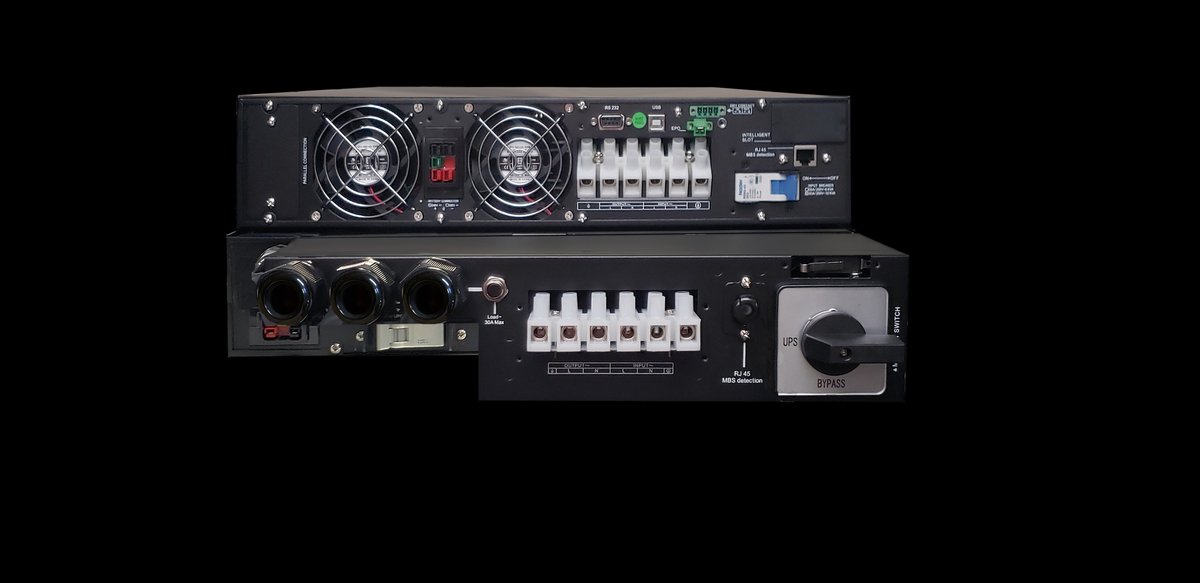
The optional XBDM module integrates input/output distribution with a maintenance-bypass switch, allowing the UPS to be serviced or replaced without interrupting critical loads — with each output receptacle protected by its own breaker. Variants (XBDM-P91A for 5/6 kVA, and -P91B/-P91C/-P91D) provide L6-30R and C19 outputs, terminal-block, and hardwired options. The XBDM mounts to the rear of a battery pack (adding 5 in of depth) or as a separate 2U rack mount.
Two different reasons to add a transformer
Most P91 5–10 kVA installations that add a transformer are doing it for voltage: getting 120 V outlets from a 208/240 V UPS. The XPD-IT60A does that, and galvanic isolation comes along with it. That is the common case and it is well served.
The other reason is isolation itself: common mode noise, measured between ground and either neutral or line. It is the tenth of the ten common power problems and the only one online double-conversion does not address, because conversion works on the waveform while common mode noise is a property of the connection. If that is why you are buying, two things change.
Consider the TX91 instead. The TX91 spans 3.8–10 kVA and builds the isolation transformer into the UPS: one chassis, one cord, one warranty, one thing to service. It covers this entire capacity range. Choose the P91 with a separate transformer when you want to size runtime independently or add isolation to a UPS that is already installed; choose the TX91 when isolation is a requirement from the start. The TX91L adds external battery systems where runtime has to reach hours.
Whichever route: put the transformer downstream of the UPS, and connect the sensitive equipment directly to its output rather than through a downstream PDU. Isolation is established at the transformer output and nowhere else. Full detail is on the UPS with isolation transformer page.
Built for critical rack loads
The P91 5–10 kVA is deployed across enterprise IT, telecommunications, industrial automation, broadcast systems, and edge infrastructure — well suited to rack UPS designs where runtime must be tailored to the application while maintaining a consistent platform across sites.
Conditioned power for enterprise racks.
Reliable backup for telecom and comms rooms.
Robust protection for control and automation loads.
Clean, zero-transfer power for broadcast racks.
Standardized online UPS for edge sites.
UL/cUL/TAA-compliant power for regulated facilities.
Capacity guidance: 5 kVA for enterprise rack infrastructure; 6 kVA for telecom and industrial systems; 10 kVA for higher-density distributed environments. Runtime is defined by outage duration, redundancy strategy, and lifecycle planning.
P91 5–10 kVA specifications
| Specification | Detail |
|---|---|
| Topology | Online double-conversion |
| Capacity | 5 / 6 / 10 kVA at unity power factor (5 / 6 / 10 kW) |
| Input voltage | 110–300 VAC (load dependent) |
| Output voltage | 208 / 220 / 230 / 240 VAC (240/120 V with optional transformer); derate 90% at 208 V |
| Frequency | 50/60 Hz ±0.1 Hz |
| Output THD | <4% (full load) |
| Efficiency | Up to 94% (online) / 99% (ECO mode) |
| Overload | 110% for 10 min; 130% for 1 min; >130% for 1 sec |
| Battery | External VRLA modules (hot-swappable): BPXR2U240A (20×12V 5Ah) / BPXR3U240A (20×12V 580W) |
| UPS dimensions | 17.2 × 23.6 × 3.5 in |
| UPS weight | 33.1 lb (5 / 6 kVA) / 39.7 lb (10 kVA) |
| Bypass / distribution | Optional XBDM (maintenance bypass + distribution, per-receptacle breakers); L6-30P input; L6-30R / C19 / terminal-block outputs |
| Operating temperature | 32–104°F (0–40°C) |
| Audible noise | <55 dBA (5/6 kVA) / <58 dBA (10 kVA) |
| Altitude | Up to 11,500 ft |
| Communications | RS-232, USB, EPO; intelligent slot (Web/SNMP, relay/dry contact, Modbus) |
| Approvals | UL 1778, cUL, FCC, RoHS, CE, TAA compliant |
| Load protection policy | $50,000 connected-equipment protection |
| Warranty | 3-year electronics & battery (USA & Canada); optional 5-year |
| Options | Step-down isolation transformer (240/120 V; most commonly the XPD-IT60A), 4-post rail kit, 2-post shelf kit, XBDM, XPDU, locking outlet dongles |
P91 5–10 kVA — frequently asked questions
Do I need an isolation transformer with this UPS?
Only if one of two things is true. If the UPS is fed at 208 or 240 V and the equipment needs 120 V, a step-down transformer is how you get there and the XPD-IT60A is the usual choice. If the load is affected by common mode noise, measured between ground and either neutral or line, isolation is the only thing that addresses it because online double-conversion works on the waveform rather than the connection. If neither applies, you do not need one.
Should I use a P91 with a transformer, or a TX91?
The TX91 spans 3.8 to 10 kVA and builds the isolation transformer into the UPS, so it covers this whole range in one chassis with one cord and one warranty. Choose it when isolation is a requirement from the start. Choose a P91 plus a separate transformer when you want to size runtime independently with external battery packs, or when you are adding isolation to a P91 that is already installed.
How much runtime can I get?
It depends entirely on the external battery pack configuration and the load, which is the point of the platform. Runtime scales after installation without replacing the UPS. Send us the load in watts and the target duration and we will confirm the pack count.
What is the XBDM and do I need one?
A maintenance bypass and distribution module. It lets the UPS be serviced or swapped without dropping the load, which matters when the rack cannot go down for a battery change or a firmware update. On a critical rack it is usually specified with the UPS rather than added later.
Does capacity change at 208 V?
Yes. Output derates to 90% at 208 V, and the 6 kVA model is further reduced by a 30 A input circuit. Size on the derated figure at the voltage you will actually run, not on the nameplate.
VRLA or lithium at this size?
The lithium platforms hold up at elevated ambient temperature, recharge faster, tolerate far more cycles and carry longer warranties. VRLA costs less to buy. Across a distributed estate where replacing a battery means a site visit, lithium generally costs less over the life of the install.
Can it run from a generator?
Yes. Online double-conversion regenerates the output frequency, so it accepts generator power rather than rejecting it as out of tolerance. Standby and line-interactive units will often run from battery instead until the battery is exhausted.
Is it TAA compliant?
Yes, alongside the rest of the Xtreme Power single-phase range, which supports federal, state, education and healthcare procurement.
Documents and related links
Plan with confidence
Xtreme Power supports engineers, integrators, and infrastructure planners designing rack UPS systems with scalable runtime and predictable lifecycle performance.