
UPS for Medical Imaging Equipment
Medical imaging systems — MRI, CT, PET, and ultrasound machines — are central to diagnosis, treatment planning, and patient monitoring, and they depend on stable, uninterrupted power to deliver accurate results and ensure patient safety. Even brief power interruptions can corrupt imaging data, damage sensitive electronics, and delay time-critical procedures. To eliminate these risks, healthcare facilities invest in a reliable UPS tailored for medical imaging equipment.

Why medical imaging equipment requires UPS protection
Medical imaging equipment produces detailed internal views of the body to support early detection and diagnosis. Because of the high power demands and sensitivity of machines like MRI and CT scanners, power disruptions can compromise image quality, interrupt procedures mid-scan, and endanger patients during diagnostic or interventional imaging.
What is an uninterruptible power supply (UPS)?
A UPS is a backup power device that keeps equipment running when the main electrical supply fails or fluctuates. It provides clean, regulated power from internal batteries (or capacitors) and protects imaging equipment from voltage sags, power surges, line noise, and complete outages.
What a UPS does for medical imaging systems
Power stability for high-load devices
MRI and CT systems require high bursts of power during scan cycles. A UPS holds consistent voltage and frequency, protecting these sensitive machines from scan disruption or equipment failure.
Preventing data loss
Imaging procedures generate large amounts of patient data. A UPS prevents unexpected shutdowns that can corrupt or erase critical scan records, preserving data integrity.
Protecting patient safety
Interruptions during imaging — especially MRI or radiation therapy — can affect diagnosis or force re-scans. A UPS keeps procedures running smoothly, even during grid failures.
Equipment longevity
Power fluctuations accelerate wear on sensitive electronics. A UPS protects equipment from irregular current, reducing maintenance costs and extending machine life.
Regulatory compliance
Many medical standards (FDA, Joint Commission, ISO) require power-continuity planning. A UPS helps providers meet compliance for critical-equipment uptime and patient safety.
Medical imaging UPS in action
A properly sized medical UPS system supports:
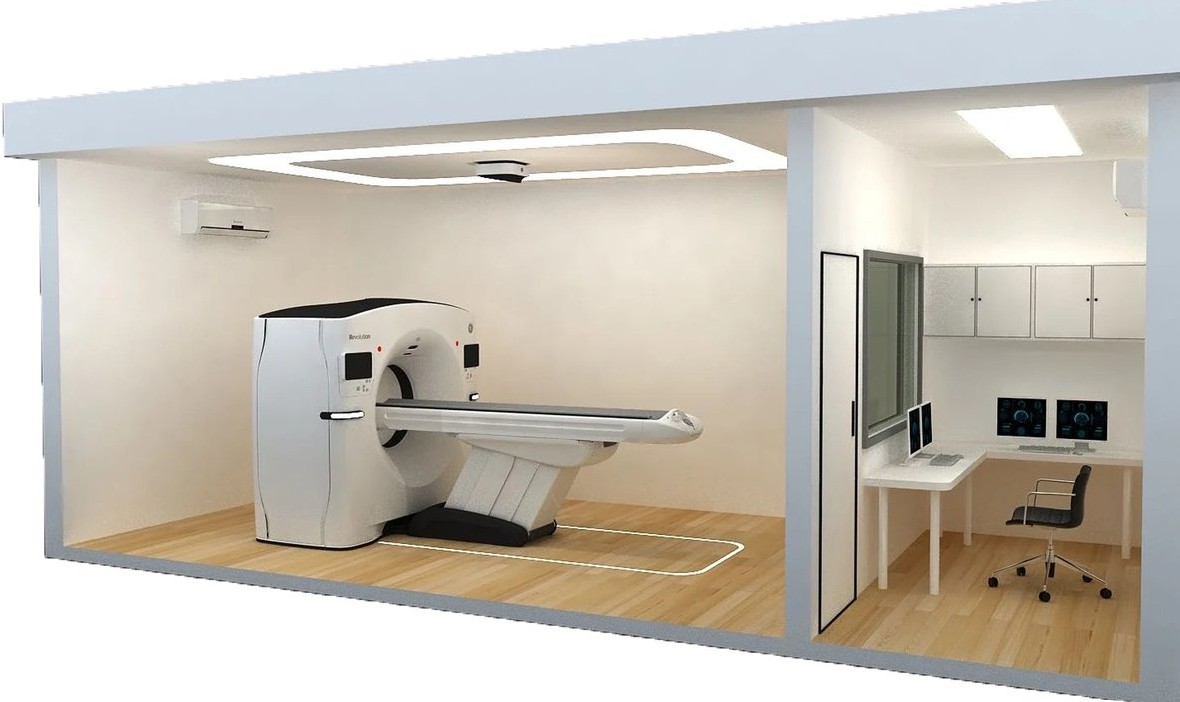
Protect imaging systems with the X90 family
The Xtreme Power X90 UPS family is designed specifically for the demanding power profiles of medical imaging equipment. With scalable capacity (50 kW–700 kW), TAA compliance, and integrated battery and bypass options, the X90-2S, X90-5S, and X90-10S are ideal for:
Where it fits
- Radiology departments
- Diagnostic imaging centers
- Emergency and trauma units
- Federal and military healthcare facilities
Power reliability is patient safety
In medical imaging, power reliability is more than a technical requirement — it is a matter of patient safety and diagnostic integrity. A UPS for CT, MRI, and PET scanners keeps equipment protected during power fluctuations, keeping operations running and patients safe.
Medical-imaging UPS — frequently asked questions
Why does medical imaging equipment need a UPS?
What size UPS does imaging equipment require?
Can a UPS protect a scan that is already in progress?
Why use a modular UPS for imaging?
Does a UPS improve power quality for imaging systems?
Ready to safeguard your imaging systems?
Speak with a UPS specialist about sizing and specifying power protection for your imaging equipment.