
UPS for Industrial Automation Systems
PLCs, SCADA systems, robotics controllers, and industrial networks are sensitive to power disturbances that IT infrastructure tolerates easily. A brief voltage sag that a server rides through can reset a PLC and stop a production line. This guide covers the right UPS architecture for each automation use case.
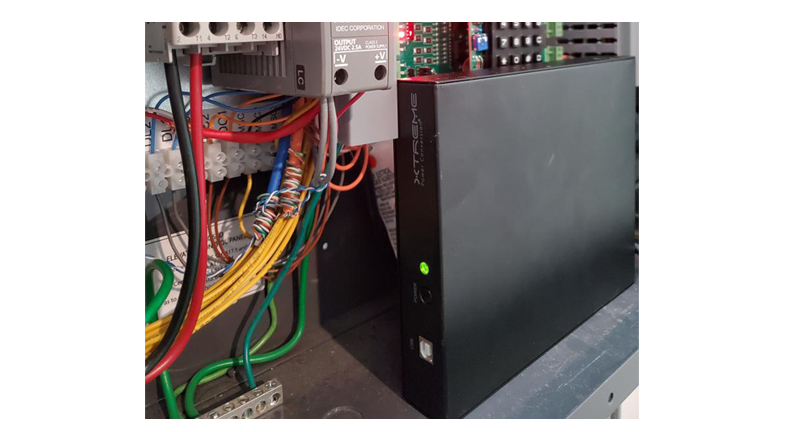
Why industrial automation environments require a different approach
Industrial facilities present electrical conditions that are fundamentally different from controlled IT environments. The same distribution system that powers sensitive automation equipment also serves motor-driven loads, variable frequency drives, and legacy infrastructure — all generating disturbances that propagate to control systems.
- Motor startup voltage sags on shared circuits
- VFD switching harmonics and high-frequency noise
- Compressor and pump cycling transients
- Brownouts in distributed manufacturing environments
- Grounding variability across plant expansions
- Legacy electrical infrastructure and aging distribution
- Shared circuits between sensitive and heavy equipment
- PLC faults requiring manual reset and process restart
- Robotics controller faults and safety shutdowns
- SCADA system instability and data integrity issues
- Industrial network communication loss
- Instrumentation errors and false alarm conditions
- Unplanned production downtime
- Time-consuming system recovery procedures
The most common mistake in industrial UPS specification is treating it as an IT problem. Standard IT UPS systems are designed for servers and network equipment — loads that tolerate transfer times and don’t fault on brief disturbances. PLCs and industrial controllers are designed for deterministic operation, and brief power events that an IT UPS handles adequately can still cause controller faults. Architecture selection needs to match the sensitivity of the load, not just the runtime requirement.
Choosing the right UPS architecture for your automation environment
Industrial automation deployments rarely fit a single UPS architecture. Different systems within the same facility — PLC cabinets, SCADA servers, field instrumentation, communication infrastructure — may require different protection strategies.
Zero transfer time, continuous power conditioning. The right choice for loads that cannot tolerate any power interruption or disturbance.
Deploy for- PLC control systems
- Robotics controllers
- SCADA servers
- Process monitoring platforms
- Industrial network switches
Galvanic separation between facility power and protected loads. Required when electrical noise or grounding instability affects system performance.
Deploy for- Sensitive industrial instrumentation
- Facilities with heavy motor loads
- Legacy electrical infrastructure
- Mixed-load shared circuits
- Environments with grounding variability
Scalable capacity with N+1 redundancy. Appropriate for central automation control rooms and high-capacity industrial infrastructure. Available single-phase or as 480V three-phase modular systems scaling to 700 kW.
Deploy for- Central automation control environments
- Large manufacturing facility infrastructure
- Industrial campuses with distributed loads
- High-capacity process control systems
- Environments requiring N+1 redundancy
| Use case | Recommended platform | Architecture | Key reason |
|---|---|---|---|
| PLC cabinet protection | J60 / J60C | Standby | Fits inside control panel, 50°C operation, lithium service life |
| SCADA and HMI servers | P91Li / J90 | Online | Zero transfer time, continuous conditioning, rack/tower |
| Robotics controllers | P91Li / J90 | Online | No transfer delay, clean sine wave output |
| Sensitive instrumentation | TX91 | Online + Isolation | Galvanic separation blocks facility noise from protected load |
| Industrial networking | J90 / J60C | Online | High-density rack, advanced monitoring, switchable outlets |
| Central control room | M90S / Li90 | Modular online | Scalable capacity, N+1 redundancy, facility-level protection |
| 480V three-phase & high-density automation | X90 Series / Ai90 | Three-phase modular | 50–700 kW scalable, N+1 or 2N redundancy, hot-swappable power modules |
UPS platforms for industrial automation
Industrial automation deployments typically combine multiple platforms — compact lithium UPS for control cabinets, online systems for SCADA and communication infrastructure, isolation UPS where power quality demands it, and modular systems for central control environments, plus 480V three-phase modular UPS for high-capacity automation infrastructure.
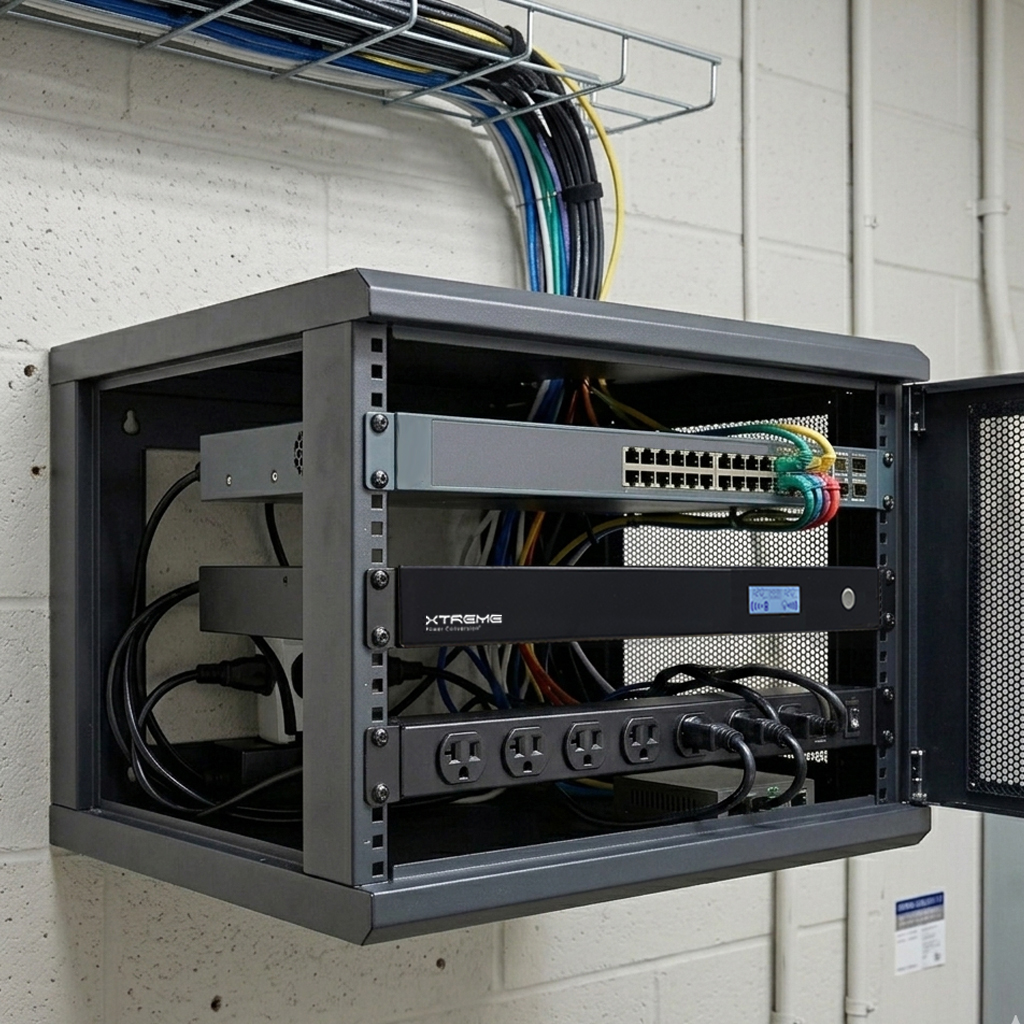
The J60 is designed to fit inside industrial control panels alongside PLCs, terminal strips, and power supplies — where a standard UPS physically cannot go. Flat mount, wall mount, or DIN rail. Fanless design. LiFePO₄ battery rated for up to 15-year service life, eliminating battery replacement inside sealed enclosures where access is difficult. The J60C adds a short-depth 1U form factor for shallow industrial racks.
View J60 → Compare → View J60C → Compare →- PLC cabinets and automation panels
- Distributed control systems
- Industrial network equipment enclosures
- SCADA field instrumentation
- Plant-floor automation cabinets
- Shallow industrial racks (J60C)
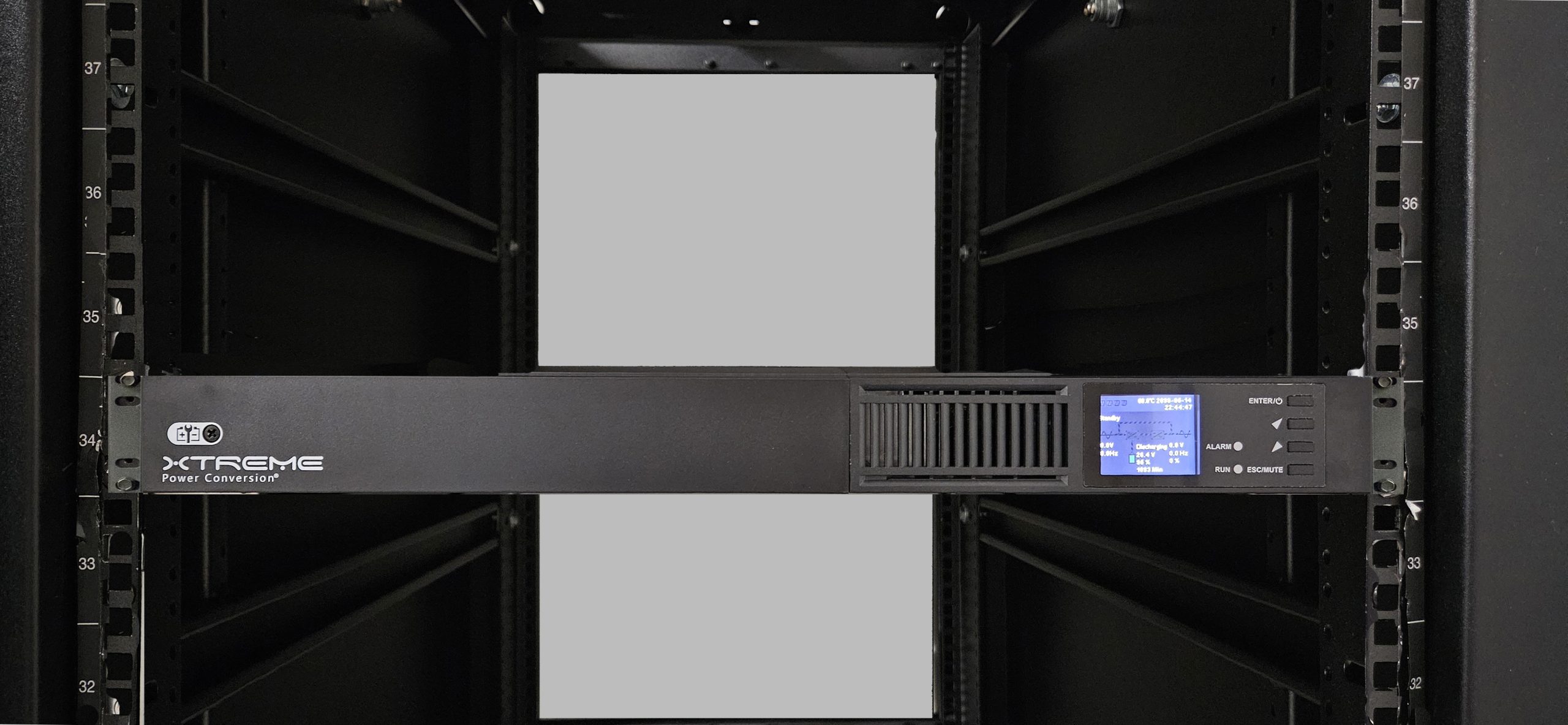
Continuous online power conditioning for industrial network switching, automation IT infrastructure, and edge computing in manufacturing environments. 1U form factor. Switchable outlet control for load management. Advanced monitoring for battery health, load, and runtime visibility.
View J90 → Compare →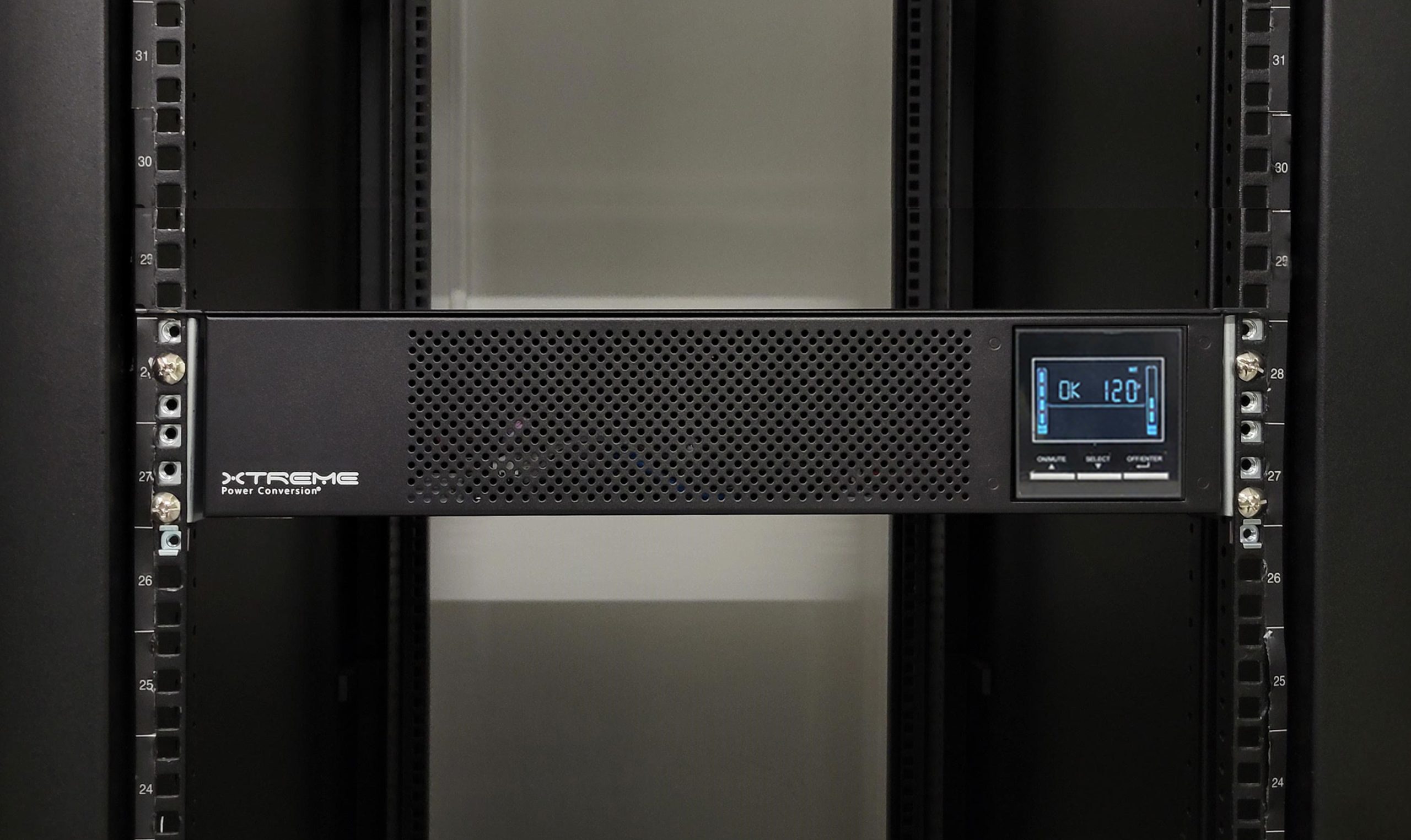
Zero transfer time online protection for automation systems that cannot tolerate any power interruption. Rack or tower convertible. LiFePO₄ battery eliminates the battery replacement cycle in remote or difficult-to-access automation deployments.
View P91Li → Compare →When online double-conversion isn’t enough — because the problem is electrical noise or grounding instability, not just outages — isolation transformer architecture creates a galvanic break between facility power and the protected load. The TX91 combines this isolation with online double-conversion UPS in a single system. Required for sensitive instrumentation in facilities with heavy motor loads, legacy electrical infrastructure, or mixed-load distribution.
View TX91 → Isolation UPS guide →- Instrumentation performance varies with electrical conditions
- Heavy motor loads share distribution with sensitive equipment
- Grounding stability cannot be guaranteed across facility zones
- Online UPS alone did not resolve instrumentation issues
- Legacy facility infrastructure introduces noise or instability
- Process reliability is directly influenced by power quality
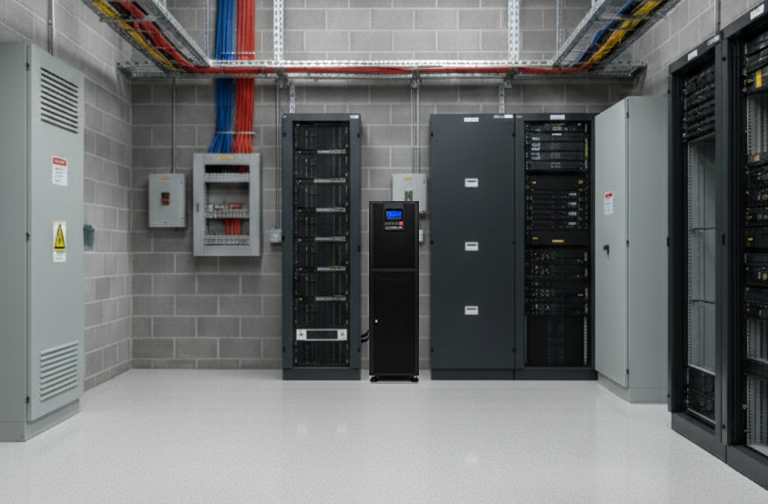
Large manufacturing facilities and industrial campuses require scalable power protection for central automation control environments and high-capacity process loads. The Li90 delivers modular lithium UPS from 10–30kW — combining the long-life advantages of LiFePO₄ with scalable capacity for facility-level protection. The M90S platform provides traditional modular online UPS from 6–48kVA with N+1 redundancy capability.
View Li90 → View M90S → Compare →- Central automation control rooms
- Large manufacturing facility infrastructure
- Industrial campuses with distributed loads
- High-capacity process control systems
- Environments requiring N+1 redundancy
- Scalable capacity with future growth

For 480V three-phase automation infrastructure — large process lines, motor-driven systems, robotics cells, and high-density compute on the plant floor — the X90 family scales from a single 50–70 kW integrated cabinet (X90-1S) up to 700 kW of N+1 or 2N modular capacity (X90-10S), all on hot-swappable power modules with full front access. The Ai90 delivers the same 50–70 kW 480V protection rack-integrated in 13U — power conversion, batteries, bypass, and output distribution in one system — for AI/GPU and high-density automation that belongs in the rack rather than on the floor.
X90 Modular Series → View Ai90 → Compare →- 480V three-phase plant-floor automation
- Large process lines and motor-driven systems
- Robotics cells and high-density work centers
- AI / GPU and high-density compute in-rack (Ai90)
- N+1 or 2N redundant central control power
- Scalable 50–700 kW capacity with future growth
Key considerations when specifying UPS for industrial automation
Industrial power protection strategies often require a combination of architectures tailored to facility-specific conditions. These are the questions that should drive specification decisions.
- Are motor-driven loads on shared distribution circuits?
- Are VFDs present? What switching frequencies?
- Has grounding stability been verified across all distribution zones?
- Have previous UPS deployments resolved the problem — or not?
- Is the disturbance source the utility, or internal facility wiring?
- What is the transfer time tolerance of the protected equipment?
- What is the ambient temperature at the installation location?
- How accessible is the location for battery replacement?
- What are the physical space constraints — cabinet, rack, floor?
- What are the runtime and maintenance strategy requirements?
Industrial automation UPS — frequently asked questions
Why do industrial automation systems need a specialized UPS?
What UPS architecture is right for industrial automation?
Why is lithium a good fit for industrial UPS?
Can a UPS protect PLCs and control systems from dirty power?
What should I consider when specifying a UPS for automation?
Talk to an Xtreme Power engineer about your automation deployment
UPS sizing, architecture selection, runtime planning, and infrastructure integration — from engineers who understand industrial automation environments.