
UPS for harsh electrical & environmental conditions
Industrial and commercial facilities often operate in electrical and environmental conditions that differ significantly from controlled IT environments. Motor-driven equipment, refrigeration systems, legacy electrical infrastructure, and non-conditioned locations introduce power disturbances that affect equipment reliability and operational continuity. Voltage instability, electrical noise, grounding variability, and elevated ambient temperatures can all influence the performance of control systems, instrumentation, network infrastructure, and distributed technology platforms. Xtreme Power provides lithium and isolation UPS solutions engineered for harsh electrical conditions, elevated-temperature deployments, and distributed infrastructure protection.
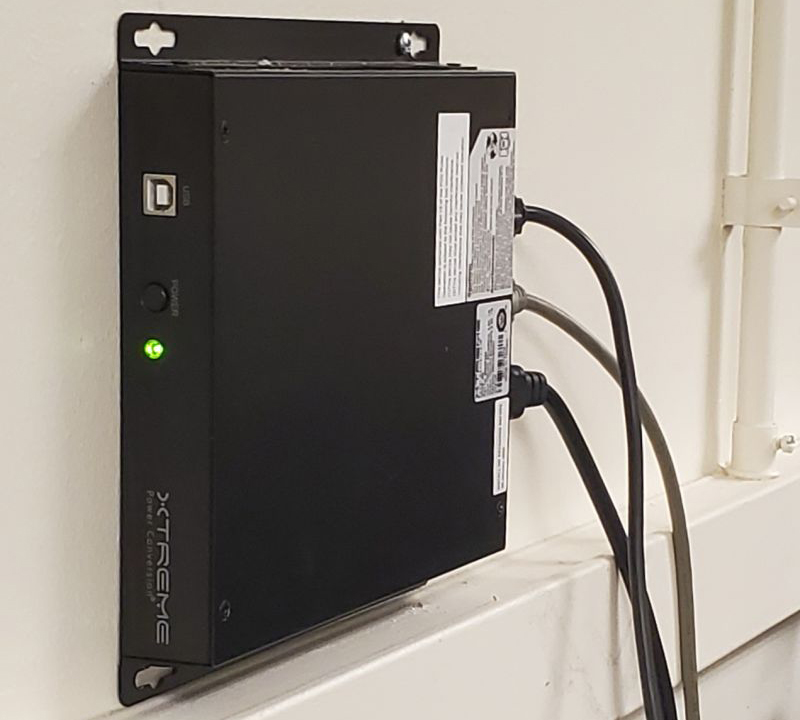
A lithium UPS wall-mounted in a non-conditioned, elevated-temperature space — a typical harsh-environment deployment.
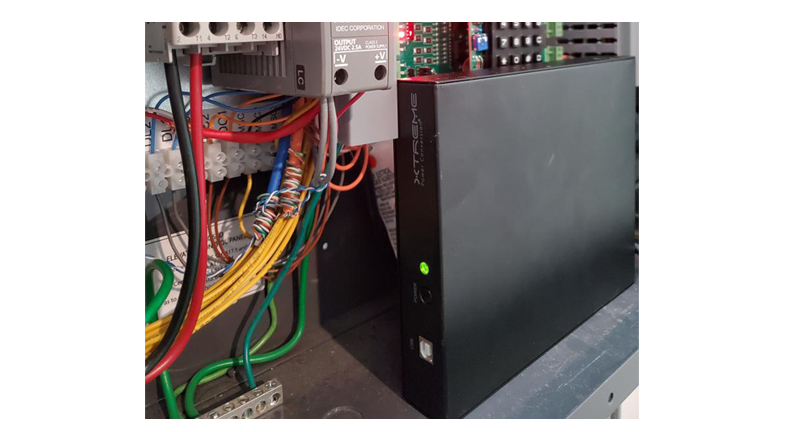
The same J60 integrated directly into an industrial control panel, sharing space with PLC and power-supply hardware.
Understanding harsh electrical environments
Harsh electrical environments combine power-quality disturbances with environmental constraints. They’re commonly encountered across:
These factors can contribute to equipment instability, unexpected interruptions, and reduced infrastructure reliability.
Lithium for elevated temperature & distributed infrastructure
Lithium-based UPS systems are increasingly deployed in harsh environments for their extended battery lifecycle and improved tolerance to elevated ambient temperatures versus traditional battery chemistries. Industrial and commercial deployments frequently install within:
Certain lithium platforms are designed for operation in ambient temperatures up to 50 °C (122 °F), supporting non-conditioned spaces where heat would otherwise reduce UPS reliability or battery service life.
Standby (J60, J60C) and online (J90) lithium platforms rated for non-conditioned, elevated-temperature deployment — with long battery service life that minimizes maintenance across distributed sites.
Industrial lithium UPS →High-temperature UPS →Isolation for electrically harsh power quality
Facilities with significant electrical noise, grounding variability, or mixed load conditions may need isolation-based protection. Isolation-transformer UPS architectures provide galvanic separation between facility power and the protected load, reducing the propagation of electrical disturbances. This approach helps where:
The TX91 Isolation UPS Series combines online double-conversion topology with an integrated isolation transformer, for deployment in electrically complex environments that need enhanced power-quality resilience.
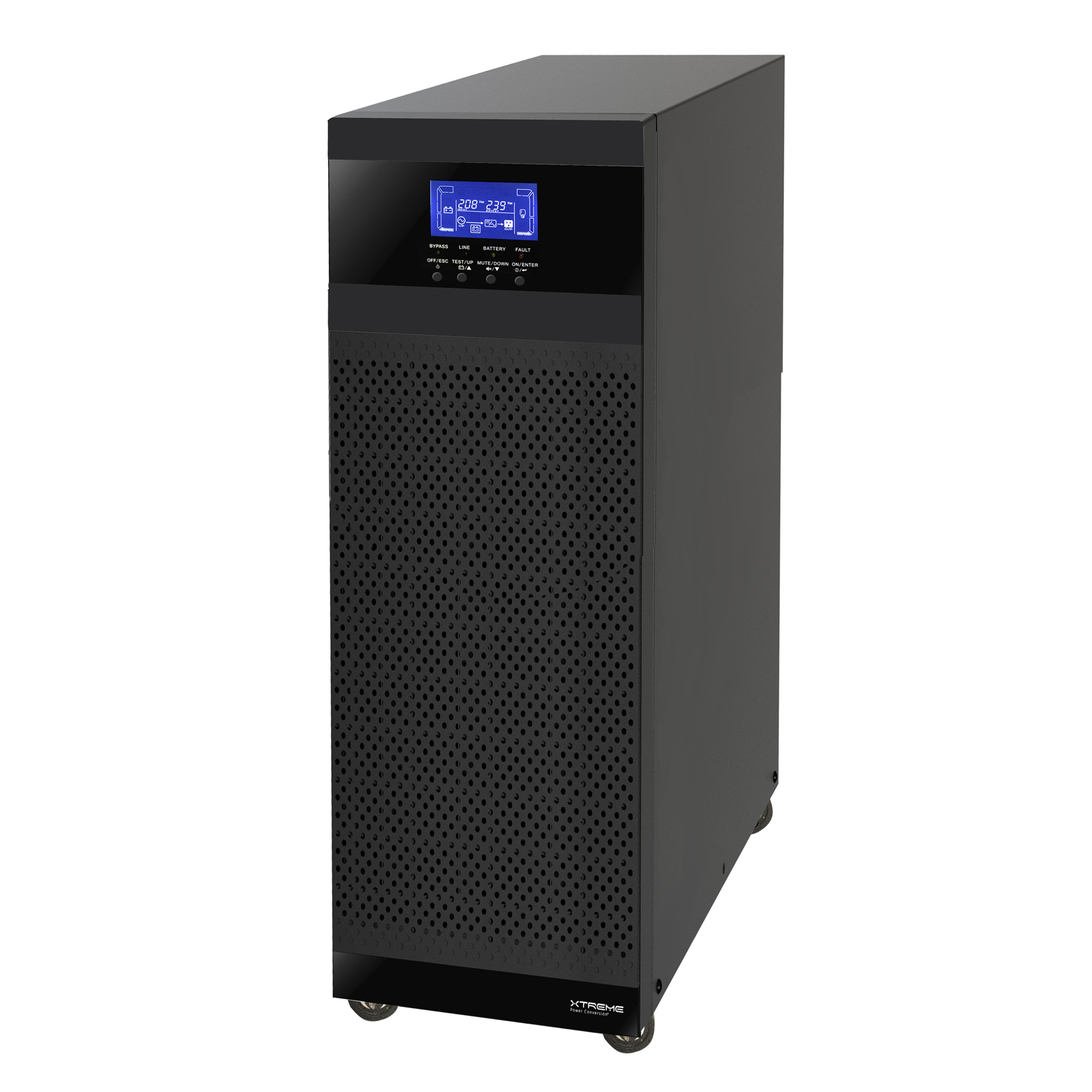
The TX91 isolation UPS — online double-conversion with an integrated isolation transformer.
Galvanic isolation plus full online double-conversion in one platform — for control systems and sensitive electronics sharing circuits with motor-driven or noisy loads.
TX91 product →Isolation UPS comparisons →Power-quality strategy guide →Three-phase lithium for industrial harsh environments
Large industrial facilities in elevated-temperature or electrically challenging conditions may need centralized three-phase protection for distributed infrastructure loads. Three-phase lithium platforms bring extended battery lifecycle, better high-temperature tolerance, and lower maintenance than conventional battery systems. The Li90 Series is engineered for centralized industrial deployments where electrical and environmental conditions affect reliability.
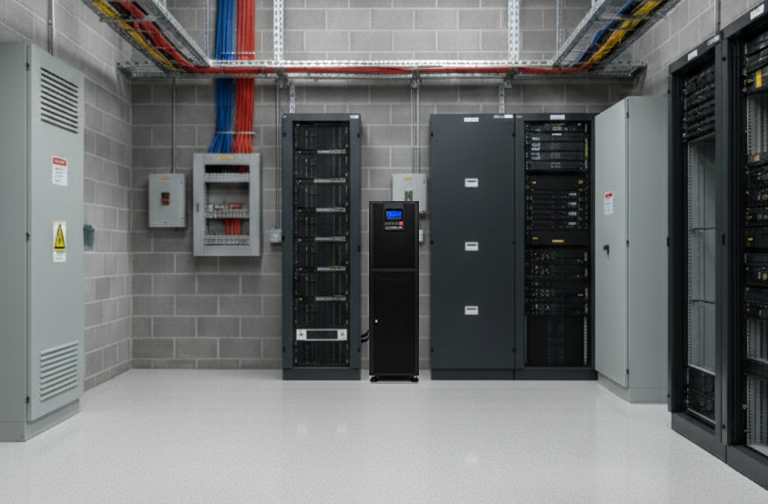
An Li90 three-phase lithium UPS deployed alongside electrical distribution in an industrial facility.
Centralized three-phase lithium protection for industrial sites — long service life and elevated-temperature tolerance for non-conditioned plant and infrastructure spaces.
Li90 product → Compare →Three-phase lithium overview →Selecting the right UPS for harsh environments
Key considerations when designing power protection for harsh environments — best worked through with facility engineers, system integrators, and infrastructure planners:
Harsh-environment UPS — frequently asked questions
What counts as a harsh environment for a UPS?
Why is lithium better for high-temperature environments?
When do I need an isolation UPS for harsh power?
Can a UPS handle industrial three-phase environments?
How do I choose a UPS for a harsh environment?
Engineering support for harsh-environment power protection
Xtreme Power supports industrial operators, commercial infrastructure planners, and system integrators with UPS architecture selection, power-quality planning, and deployment-strategy guidance.
Related guides & solutions
Environments & lithium
Isolation & power quality
Three-phase lithium