
Li90 — Compact Three-Phase Lithium UPS
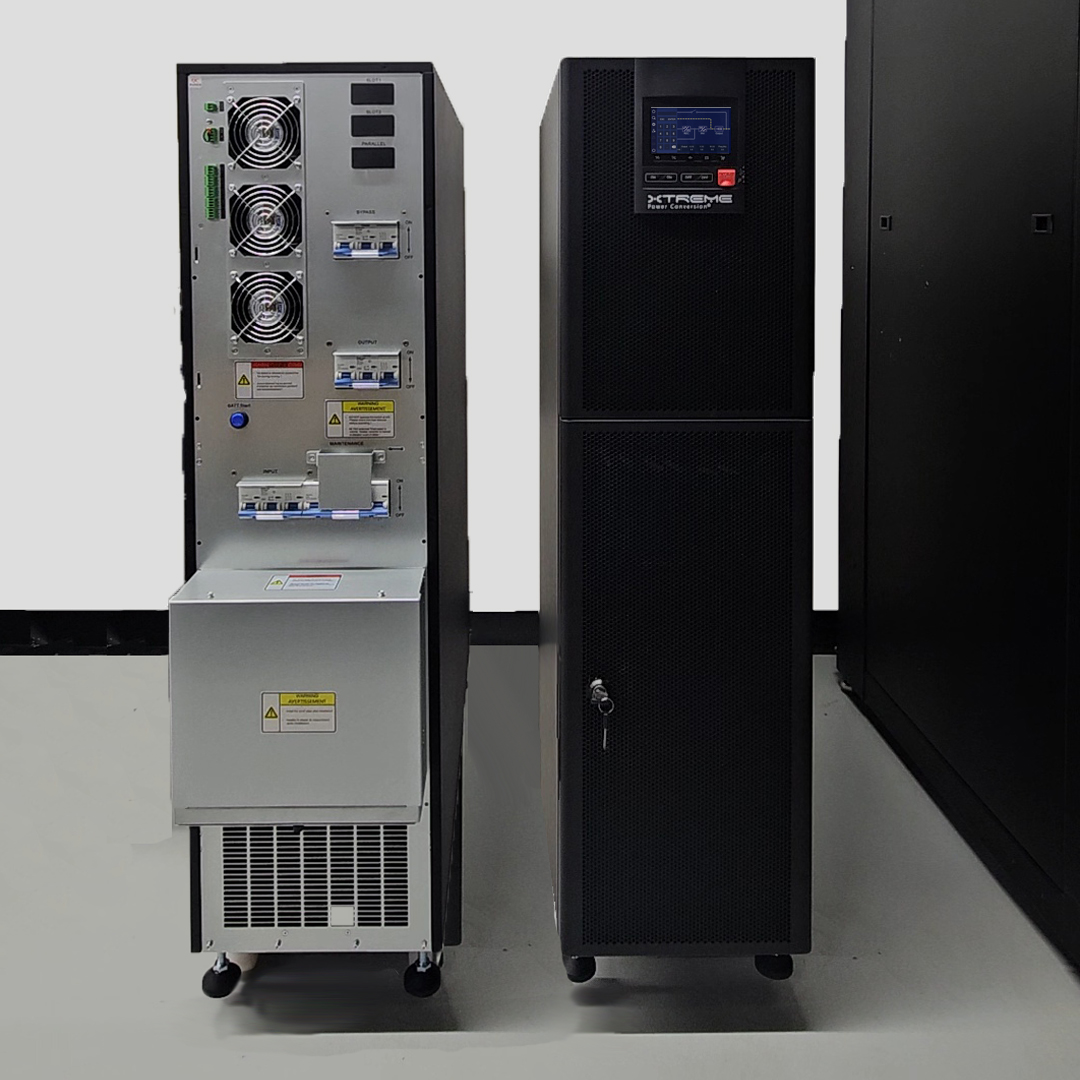
The Li90 replaces the traditional three-phase UPS plus external battery-cabinet combination with a single slim tower. LiFePO₄ batteries are integrated inside the enclosure — no external cabinets, no floor space for battery frames. Available in 10kW, 20kW, and 30kW.
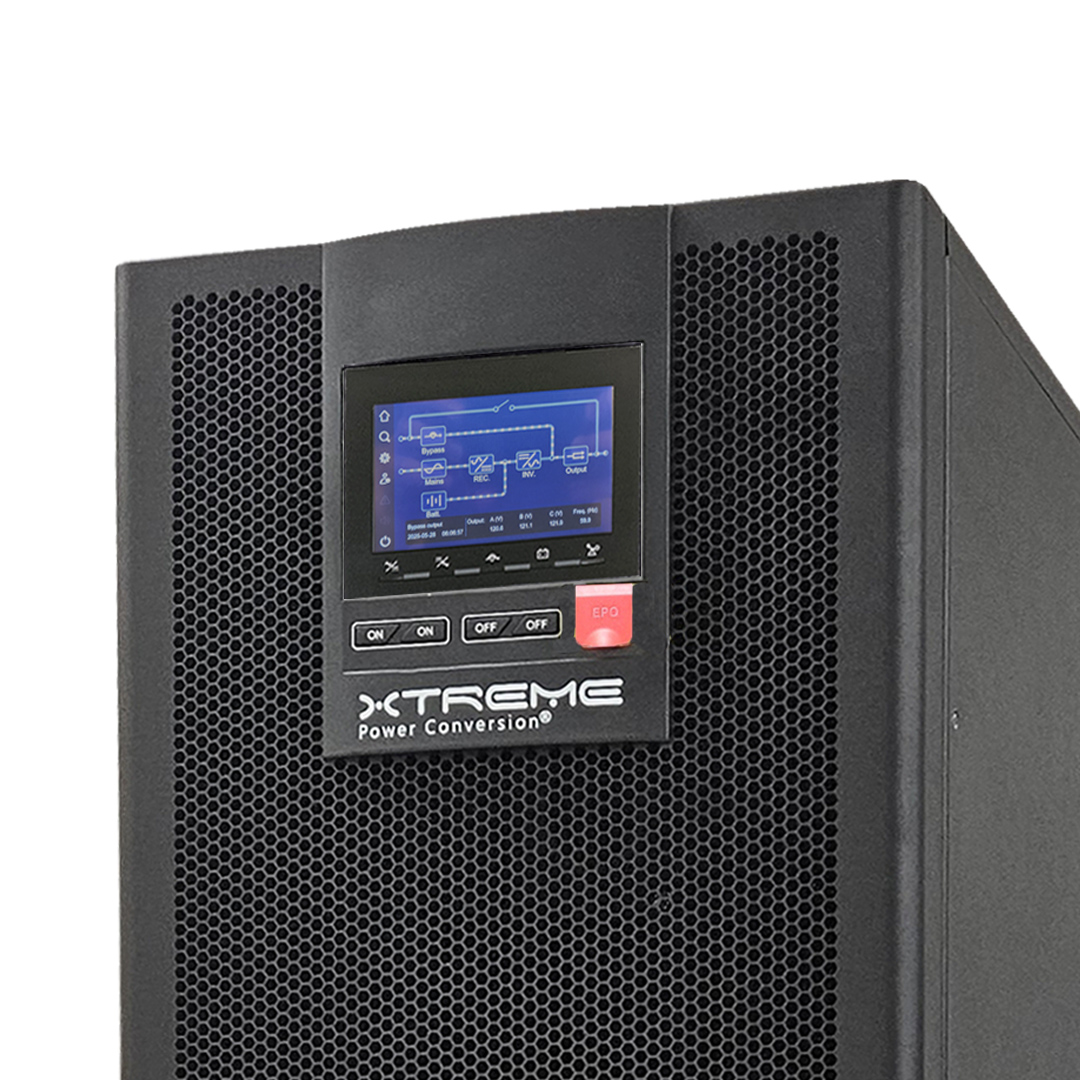
Li90 model lineup — 10kW, 20kW, 30kW
All three Li90 models share the same internal battery architecture, cabinet design, and operating specifications. The difference is capacity and the number of battery modules supported. If you’re between sizes, talk to an engineer before specifying — runtime requirements often drive the decision more than load size.
- 15 min at 10kW · 1 module
- 30 min at 10kW · 2 modules
- 45 min at 10kW · 3 modules
- 87 min at 5kW · 3 modules
- 15 min at 20kW · 2 modules
- 22 min at 20kW · 3 modules
- 15 min at 30kW · 3 modules
- 18 min at 25kW · 3 modules
Internal batteries — no external cabinets required
Conventional three-phase UPS systems require separate external battery cabinets — enclosures that consume additional floor space, require additional electrical connections, and complicate installation. The Li90 integrates up to three LiFePO₄ battery modules inside the lower section of the UPS enclosure. The footprint is the UPS. That’s it.
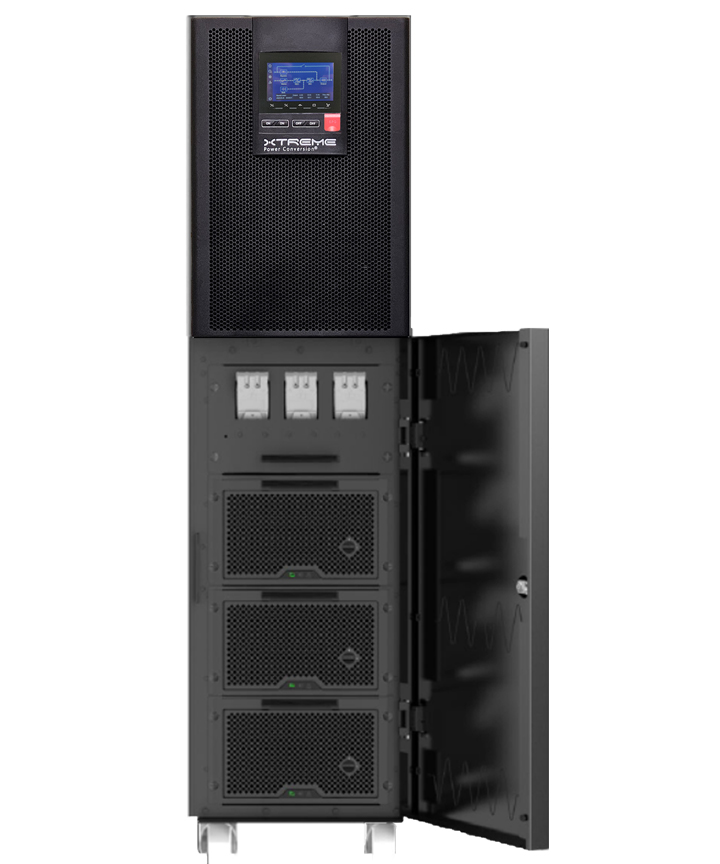
Runtime scales with battery modules
All three models accept up to three hot-swappable LiFePO₄ modules (50 Ah / 57.6 V / 2,880 Wh each). The 10kW operates with 1 module, the 20kW requires at least 2, and the 30kW uses all 3 — internal runtime ranges from about 15 minutes at full load to roughly 87 minutes at light load on three modules.
See the full runtime-by-load matrix and complete specifications on the Li90 product page →
Designed for demanding deployment environments
50°C operation — no cooling dependency
Rated for continuous operation to 50°C (122°F) without derating until 40°C. Deploy in telecom shelters, industrial rooms, and electrical spaces where VRLA systems require supplemental cooling or capacity reduction.
Hot-swappable LiFePO₄ modules
Modules are replaced without tools and without powering down the load. LiFePO₄ chemistry supports up to 15 years service life in ideal conditions and 3,000–5,000 charge cycles — significantly longer than VRLA.
4.3″ touchscreen LCD
Full-color touchscreen with single-line mimic diagram, event logging, and security access control. Two communication slots for optional SNMP/Web cards. Programmable dry contacts — 1 input, 5 output — for facility integration.
Full breaker design with maintenance bypass
Input, output, bypass, and maintenance-bypass breakers integrated in the cabinet. Maintenance bypass enables safe on-site servicing without powering down the load. No external switchgear required.
110% for 60 min · 150% for 1 min
High overload capacity handles startup surges from motors, compressors, and inductive loads without nuisance tripping or transfer to bypass. Appropriate for industrial and facility environments with variable load profiles.
Conformal-coated PCBs · smart de-dust fans
Circuit boards are conformal-coated for enhanced durability in industrial and high-humidity environments. The self-cleaning smart de-dust fan system reduces maintenance and extends service life in dusty environments.
Li90 vs. traditional three-phase VRLA UPS systems
| Feature | Li90 lithium platform | Typical VRLA three-phase UPS |
|---|---|---|
| External battery cabinets | None — batteries internal | Required for extended runtime |
| Cabinet width | 12.6″ | 24–36″ |
| System weight (30kW) | approx 483 lbs | 900–1,500 lbs |
| Battery service life | Up to 15 years | 3–5 years |
| Operating temperature | 50°C | 25–30°C |
| Battery service | Hot-swap — no downtime | Downtime planning required |
| Maintenance | Minimal — no replacement cycles | High — recurring replacement |
| Lifecycle cost | Lower | Higher |
Where the Li90 is deployed
Engineering documents
Warranty: 2-year on-site UPS system warranty including startup (USA only). 5-year battery warranty covering standard use up to 40°C ambient (USA only). Approvals: UL 1778 · UN 38.3 · UL 1973. Not currently cUL listed for Canada — confirm approvals status for Canadian deployments.
Li90 three-phase lithium UPS — frequently asked questions
What is the Li90?
Does the Li90 need external battery cabinets?
How is Li90 runtime extended?
How does the Li90 compare to a traditional three-phase VRLA UPS?
Where is the Li90 deployed?
Talk to an engineer about the right Li90
Runtime requirements often drive the model decision more than load size. Our specialists will help you align capacity, battery-module count, and runtime to your facility — and plan VRLA replacement or modernization.