
UPS Systems for Edge Data Centers
Edge data centers operate under different constraints than centralized facilities — constrained spaces, limited cooling, limited on-site service access, and variable utility quality. UPS systems for edge deployments must be compact, reliable, and scalable without requiring the infrastructure investment of a traditional data center. This guide covers the right platform for each deployment tier.

Edge deployments range from one rack to regional hubs
Edge infrastructure spans a wide range of deployment sizes. The right UPS platform depends on deployment scale, available power (single-phase vs three-phase), and whether lithium or modular architecture is the right fit for the site conditions.
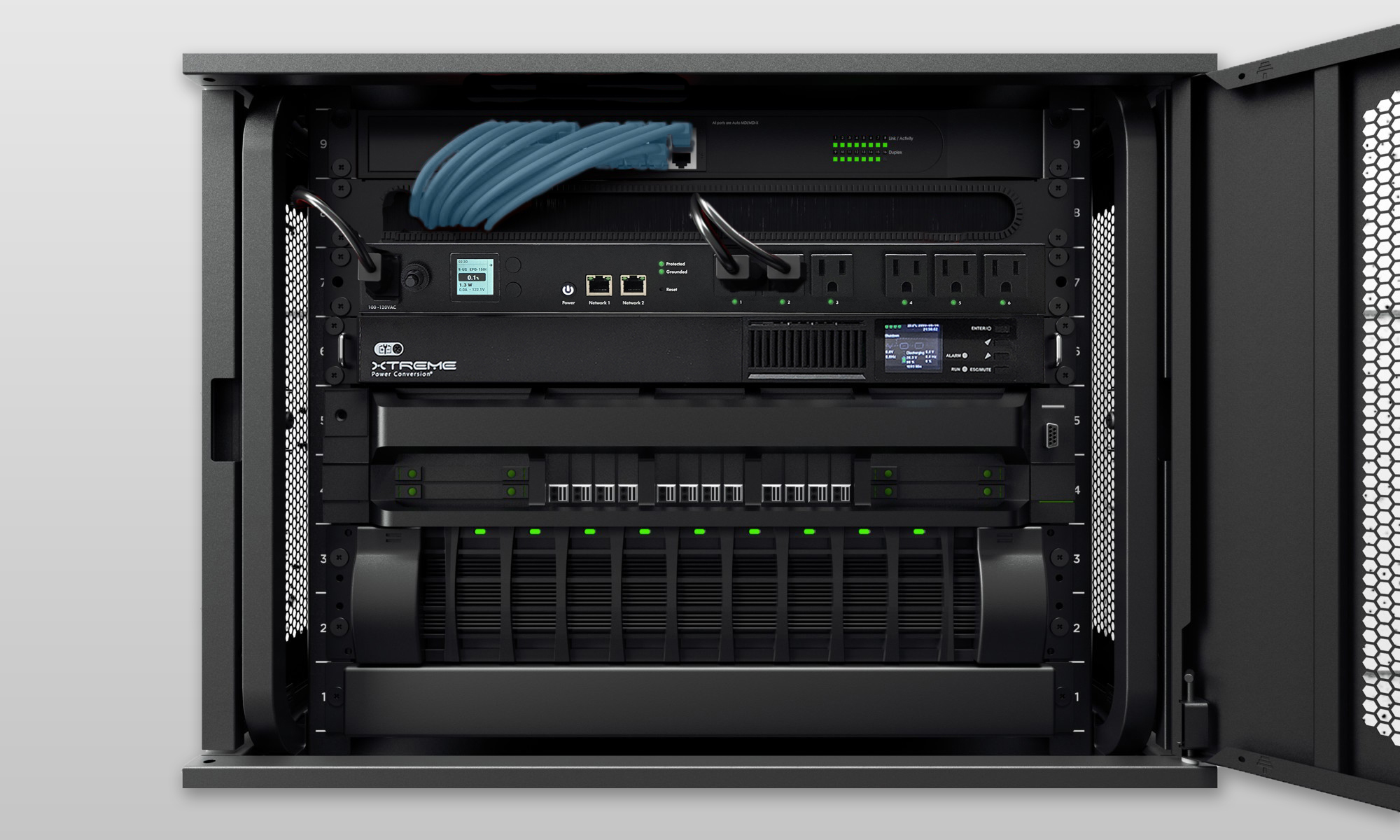
Micro-edge deployments are the most distributed tier — single wall-mounted racks, retail IT closets, telecom cabinets, and remote monitoring sites. These locations typically have limited space, no dedicated HVAC, and infrequent on-site service. The UPS needs to fit the rack, survive the temperature, and not require battery replacement every 3–5 years.
- Single wall-mounted network racks
- Retail and branch IT closets
- Telecom cabinets and IDF enclosures
- Remote monitoring sites
- Industrial enclosures
1U online double-conversion with switchable outlets for remote reboot. High-temperature operation to 50°C. LiFePO₄ battery — no routine replacement. J90 for 120V; J90i for 208V/230V international deployments.
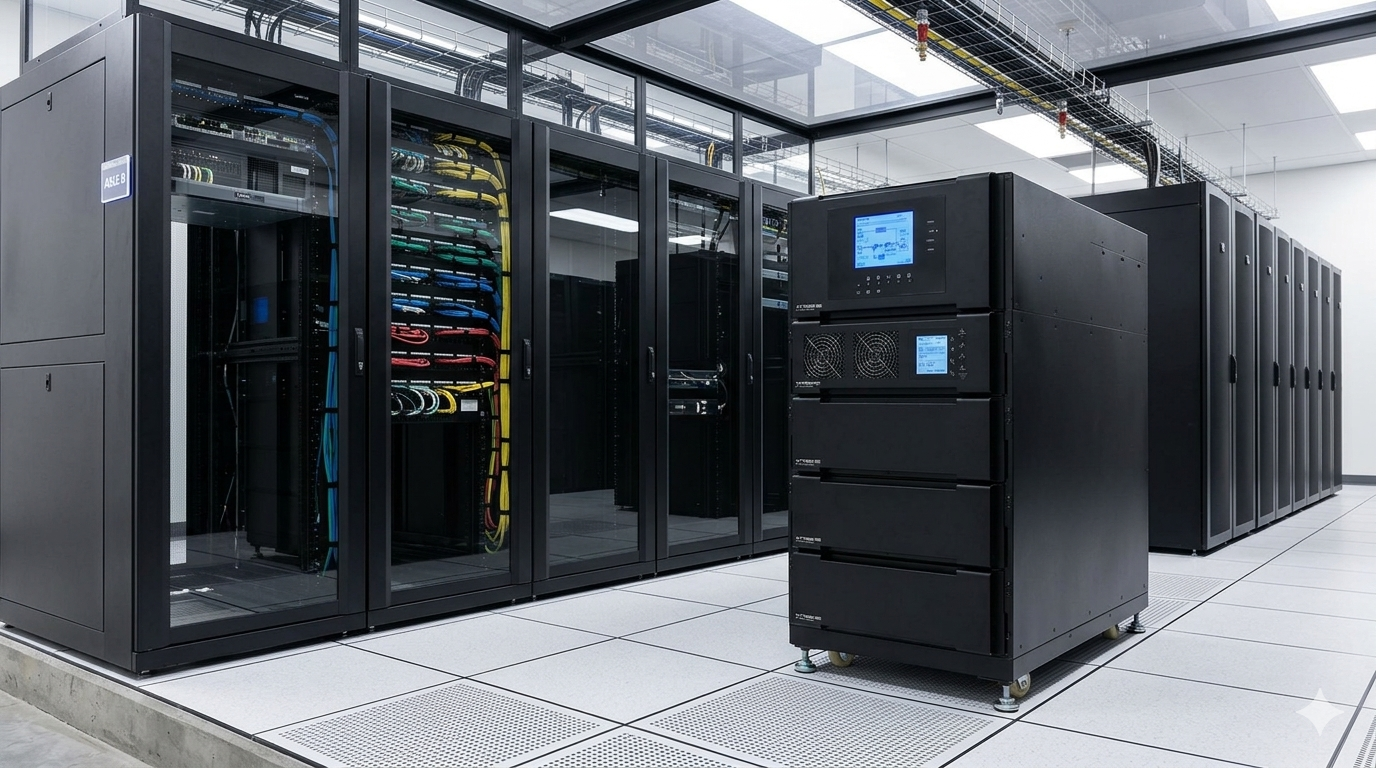
Many distributed edge environments operate on single-phase power — cell tower base stations, telecom shelters, rural aggregation sites, outdoor equipment cabinets, and utility monitoring stations. These sites need more capacity than micro-edge deployments but are constrained to single-phase electrical service. Modular architecture allows capacity to scale with the load without over-purchasing at installation.
- Cell tower base stations
- Telecom shelters and outdoor cabinets
- Rural and remote aggregation sites
- Utility and pipeline monitoring stations
- Transportation infrastructure sites
Scalable modular architecture for high-capacity single-phase edge and telecom. N+1 redundancy. Integrated maintenance bypass. Start with the capacity you need and expand as load grows — without replacing the UPS.
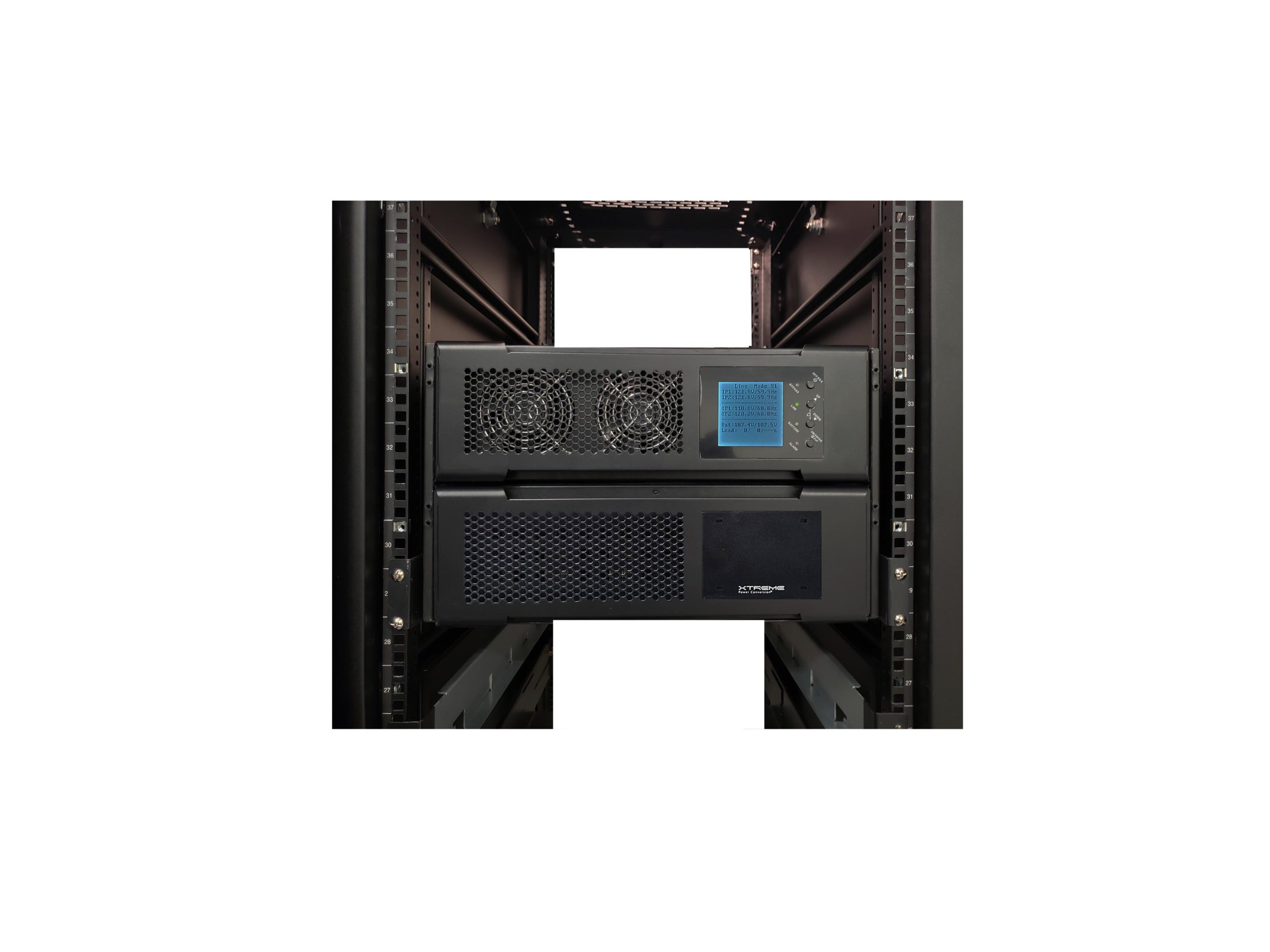
Where three-phase power is available, compact modular three-phase UPS systems provide scalable protection with higher efficiency than single-phase equivalents. Small edge data rooms — distributed campus facilities, regional compute nodes, small colocation deployments — typically fall in the 5–30 kW range. Two platforms cover this tier: the M90C for traditional modular architecture, and the Li90 for deployments where lithium battery advantages outweigh the higher upfront cost.
- Small edge data rooms with 3-phase power
- Distributed campus compute nodes
- Regional aggregation points (smaller tier)
- Edge AI inference environments
Traditional modular three-phase architecture. Lower upfront cost. External batteries. Scalable from 5–24 kW.
LiFePO₄ batteries internal to the cabinet — no external battery frames. Hot-swappable modules. 50°C operation. Best for deployments where battery replacement logistics are a long-term operational concern.
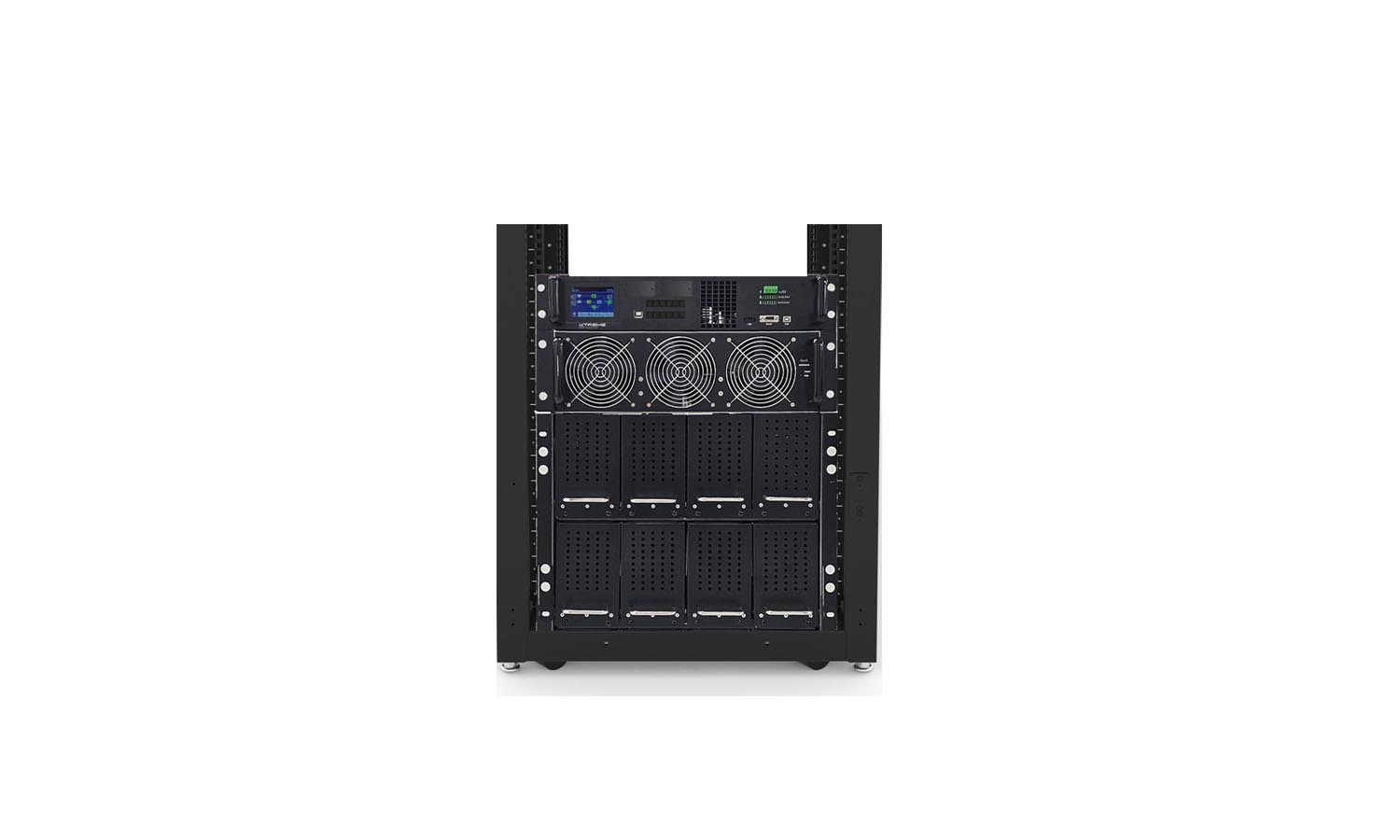
Regional edge hubs aggregate traffic and computing resources across broader service areas. These deployments often resemble small enterprise data centers — row-based infrastructure, dedicated electrical rooms, generator coordination, and redundancy requirements that approach enterprise tier. Three platforms cover this range depending on density, voltage, and redundancy requirements.
Typical deployments- Regional aggregation hubs
- High-density AI and GPU compute sites
- Row-based edge data center infrastructure
- Enterprise campus core facilities
- Colocation edge deployments
Enterprise modular architecture for row-based or centralized edge deployments. Scalable to 140 kW with N+1 redundancy.
Rack-integrated modular UPS designed for high-density edge and AI-enabled sites. Factory-integrated with rack stack.
Scalable modular platform for centralized regional hubs requiring the highest capacity.
Power challenges in edge environments
Edge data centers face a consistent set of constraints that differ from centralized facilities. UPS selection needs to account for all of them — not just load size.
Edge locations rarely have dedicated electrical rooms. UPS systems must fit in existing rack space or alongside IT infrastructure. Internal battery architecture (Li90) and rack-integrated UPS (Ai90, J90) reduce footprint without sacrificing capacity.
Edge sites frequently operate without dedicated HVAC. Lead acid batteries degrade rapidly above 25°C — halving service life for every 10°C increase. Lithium platforms operating to 50°C remove the cooling dependency for UPS battery performance.
Most edge sites have no full-time staff. Battery replacement requires scheduling a technician visit — adding cost and a service window. LiFePO₄ platforms rated for 10–15 years dramatically reduce the frequency of these events. Remote reboot capability reduces truck rolls further.
Edge sites — especially rural, industrial, and telecom locations — often have less stable utility power than urban data center environments. Online double-conversion UPS provides continuous conditioning regardless of utility conditions, not just backup during outages.
Edge deployments often grow faster than planned. Modular UPS architecture allows capacity to scale incrementally — adding power modules as load grows — without replacing the full system. This aligns capital expenditure with actual load growth.
Many edge sites don’t have generator backup. UPS runtime must bridge the full outage duration or support controlled shutdown. Runtime strategy should be designed explicitly for the site’s availability requirements and service level agreements.
Runtime strategy for edge sites
Edge data center runtime targets differ from enterprise data center assumptions. Most edge sites design for one of three scenarios — and the UPS strategy follows from which scenario applies.
| Scenario | Typical runtime target | UPS strategy |
|---|---|---|
| Generator available on-site | 2–5 minutes | Bridge time only — size for generator transfer, not extended outage. Smaller battery, lower cost. |
| No generator — utility-dependent | 10–30 minutes | Controlled shutdown time — enough to cleanly shut down systems and preserve data before battery exhaustion. |
| High availability requirement | 30–60+ minutes | Extended runtime for SLA compliance. May require additional battery modules or extended battery configuration. |
Speak with an edge infrastructure specialist
Load growth forecasting, redundancy planning, runtime modeling, generator coordination, and site-specific UPS selection across all edge deployment tiers.