
Single-phase UPS
Standby and line-interactive UPS
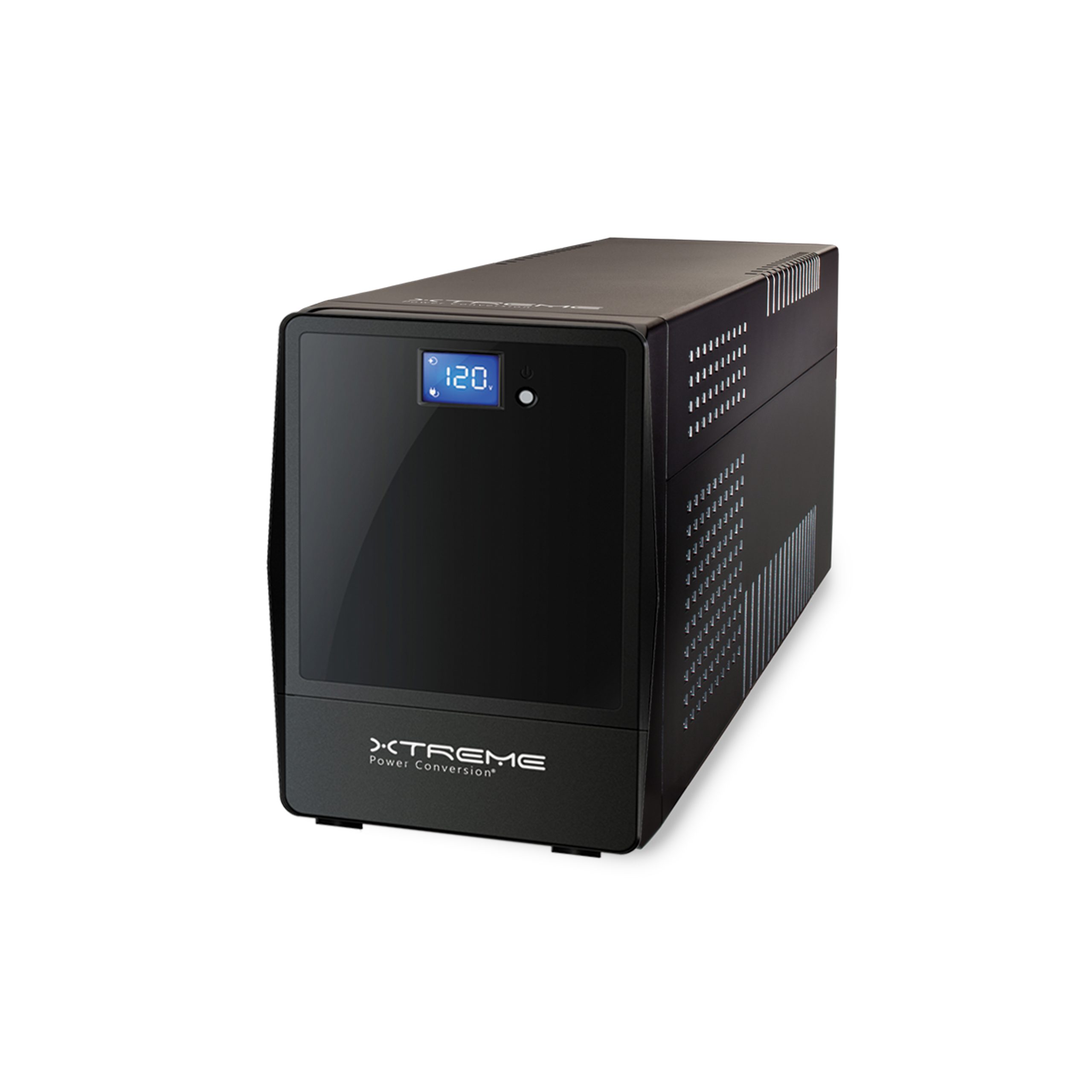
Cost-effective UPS for desktop PCs, point-of-sale, small network racks and wall-mounted equipment. Standby units switch to battery when the power fails; line-interactive units also correct sags and surges without using the battery. All use lead-acid batteries.
Compare models
120V
For North American desks, closets and racks.


208/230V
For higher-voltage equipment and international sites.

Prefer lithium? The J60 and J60C compact lithium UPS last up to 15 years and run to 50 °C. See lithium UPS →
How to choose
| If you need | Start with |
|---|---|
| Protection for a single desktop PC or POS terminal | A60 or S71 |
| A unit that mounts in a shallow rack, a tower or on a wall | V70 |
| Servers or other equipment with active-PFC power supplies, up to 3000 VA | P80 (pure sine wave) |
| 230V equipment on a budget | A70i |
| 208-240V loads up to 5 kVA | P80g |
| No transfer at all, for critical loads | An online UPS: see single-phase online UPS |
Frequently asked questions
What is the difference between standby and line-interactive?
A standby UPS passes utility power straight through and switches to battery when it fails. A line-interactive UPS adds voltage regulation, so it corrects sags and surges without draining the battery, which means fewer transfers and longer battery life.
Do I need pure sine wave output?
Many modern servers and PCs use active power factor correction (active PFC), which can misbehave on a stepped or simulated sine wave. For that equipment, choose a UPS with pure sine wave output, such as the P80.
When should I choose an online UPS instead?
When the load cannot tolerate even a few milliseconds of transfer, when utility power is poor, or when the equipment is critical. Online double-conversion UPS such as the P91 and J90 regenerate the output continuously.
How long do the batteries last?
Lead-acid UPS batteries typically need replacing every 3 to 5 years, sooner in warm rooms. Lithium UPS such as the J60 last up to 15 years.
Are these UPS TAA compliant?
Most are. See the TAA-compliant single-phase UPS page for the current list of models.