
Data Center UPS Systems
Modern data centers need uninterruptible power that delivers scalability, redundancy, efficiency, and predictable runtime. Whether you’re protecting an edge site, an enterprise server room, or a full data hall, UPS architecture is foundational to uptime.
Xtreme Power designs modular single- and three-phase UPS systems for mission-critical data center applications — from per-rack protection to multi-hundred-kilowatt deployments. Edge data centers carry different design considerations than centralized facilities; explore UPS for Edge Data Centers.

Centralized vs distributed vs rack-level UPS
One source for the facility
Large three-phase systems protect the entire facility, typically paired with VRLA battery strings. Common in legacy enterprise environments.
Protection by zone or row
Multiple UPS systems support zones or rows, improving redundancy and scalability. Widely used in colocation and modular deployments.
Power inside the rack
UPS integrated directly within the rack for high-density compute and edge environments — eliminating single points of failure and aligning with AI and GPU infrastructure trends.
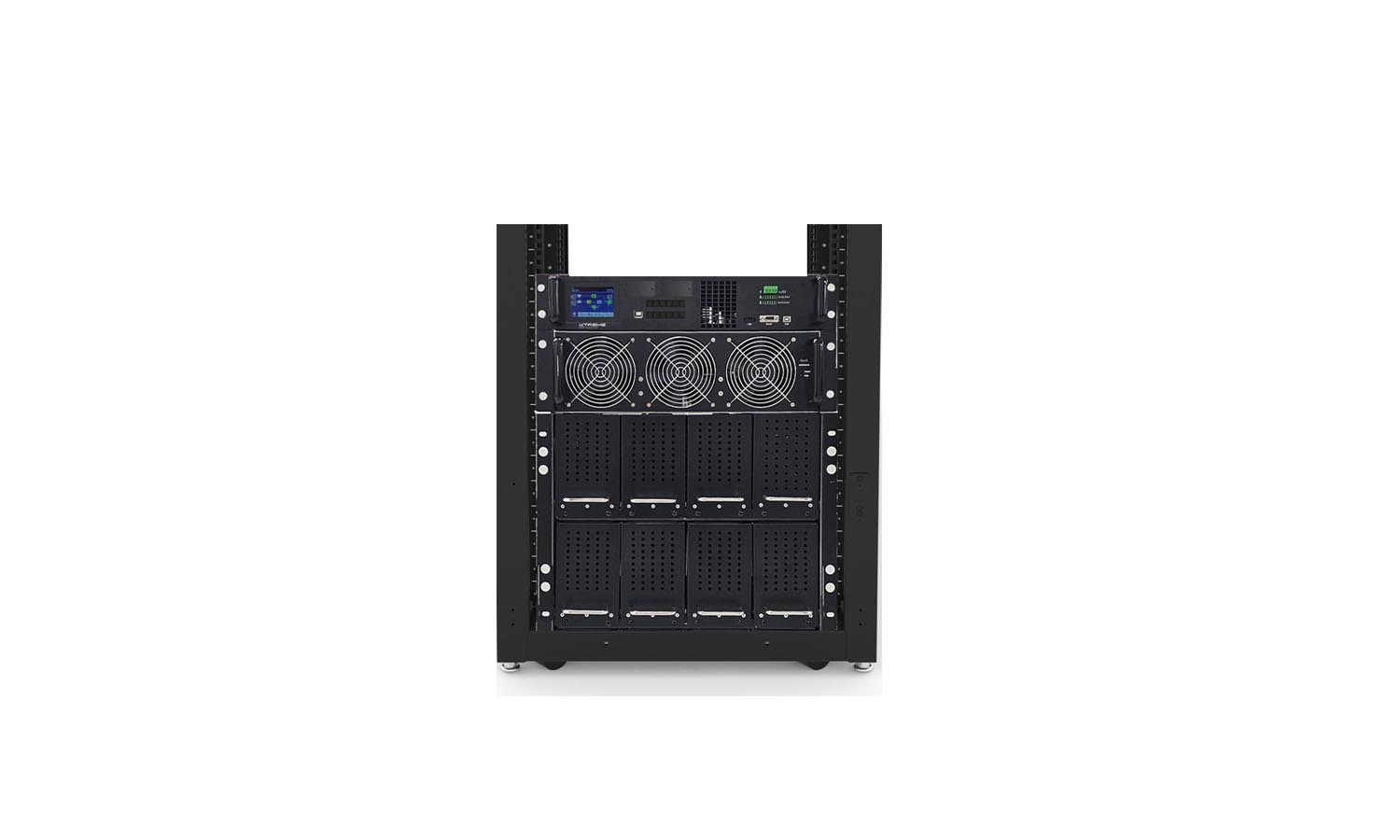
Compare data center UPS architectures
| UPS Platform | Architecture | Capacity | Voltage Options | Battery | Footprint | Best Use Case |
|---|---|---|---|---|---|---|
| Ai90 SeriesComing Nov 2026 | Rack-Integrated | 50–70 kW | 480/277V · 480V 3W · 400/230V | VRLA | 13U rack | High-density compute, AI, GPU |
| X90 Series | Modular | 50–700 kW | 480V · 400V class | VRLA or Lithium | Floor-standing cabinet | Enterprise & large-scale data centers |
| Li90 Series | Integrated Lithium | 10–30 kVA | 208/120V | Lithium (internal) | Compact cabinet | Infrastructure modernization |
| M90U Series | Modular | 15–140 kW | 208/120V | VRLA | Modular cabinet | Mixed-use & light data center |
Match the platform to the architecture
Integrated UPS, batteries, bypass, and distribution in a single 13U footprint. Built for high-density compute and rack-level deployments.
Scales for large enterprise and colocation deployments with flexible external battery configurations across the 480V / 400V class.
Integrated lithium UPS with internal LiFePO₄ batteries — engineered to cut footprint, maintenance, and lifecycle cost versus legacy systems.
Scalable three-phase platform (M90U-80 and M90U-140) with hot-swappable 15/20 kW power and battery modules, full wrap-around maintenance bypass, and N+1 redundancy — in an industry-leading footprint that saves up to 40% of floorspace.
Lithium or lead-acid
Longer life, higher temp, less maintenance
Longer service life, higher-temperature operation, and reduced maintenance in a smaller footprint.
Lower upfront cost
Lower initial cost, but requires more space, more maintenance, and periodic battery replacement over the system’s life.
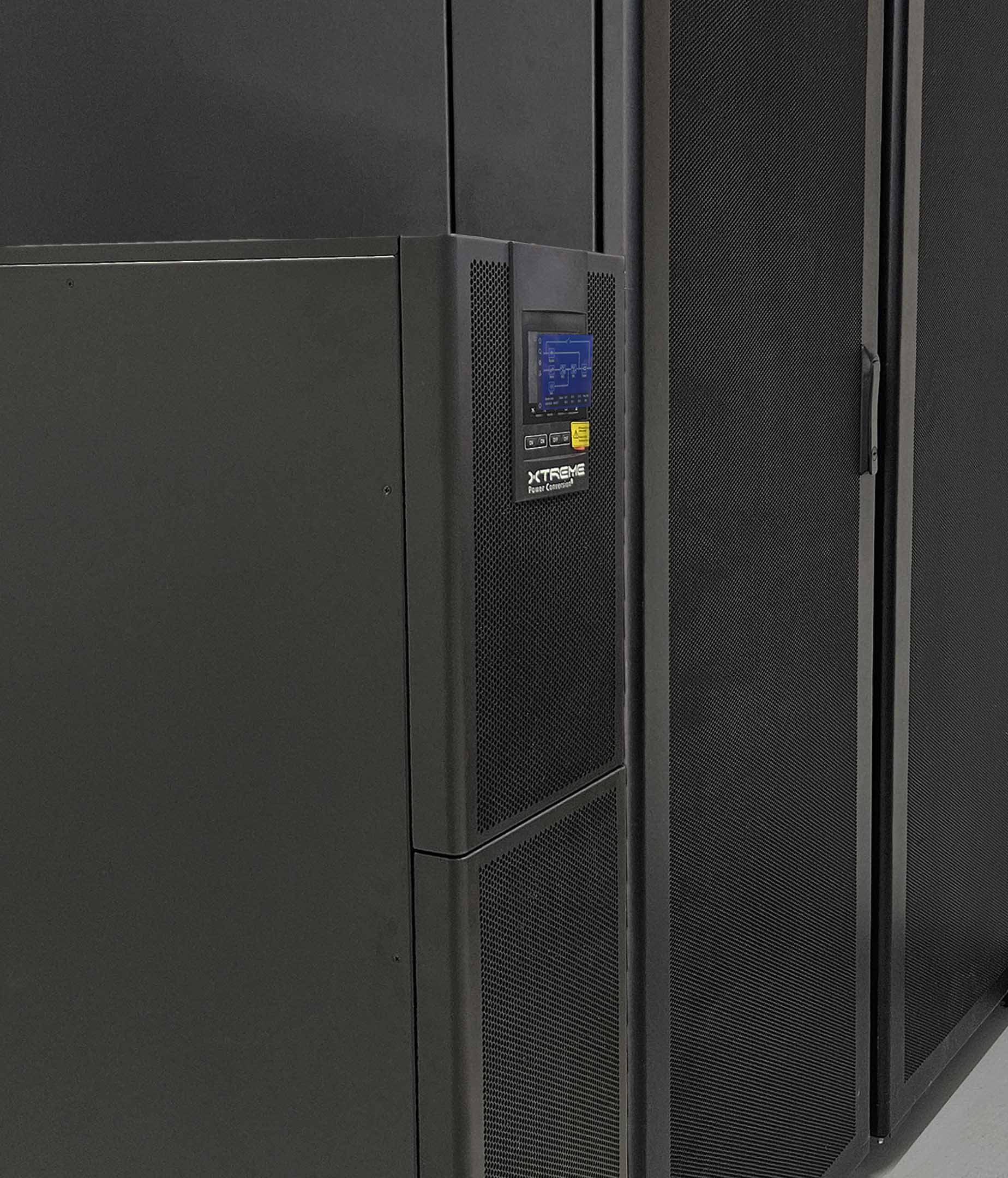
What drives the right architecture
When to move beyond centralized UPS
Rack-level and modular UPS designs are increasingly preferred for high-density compute, improved fault isolation, and incremental scalability. They also reduce distribution losses and eliminate large battery rooms.
Where these systems deploy
How Xtreme stacks up
See detailed comparisons against APC, Eaton, Vertiv, and other platforms.
Data center UPS — frequently asked questions
What size UPS does a data center need?
What is the difference between centralized, distributed, and rack-level data center UPS?
Should a data center UPS be lithium or lead-acid?
How much redundancy does a data center UPS need?
When should I move beyond a centralized UPS?
Plan your data center UPS architecture
Xtreme Power Conversion supports UPS sizing, runtime planning, and architecture selection across centralized, modular, and rack-level deployments.