
UPS Systems for Mass Spectrometers
A power disturbance mid-run doesn’t just stop a mass spectrometer — it scraps the sample, corrupts the acquisition data, and triggers a recalibration sequence that can take hours. In pharmaceutical QC, that’s a batch hold. In environmental testing, it’s a missed reporting deadline. The right UPS prevents all of it.
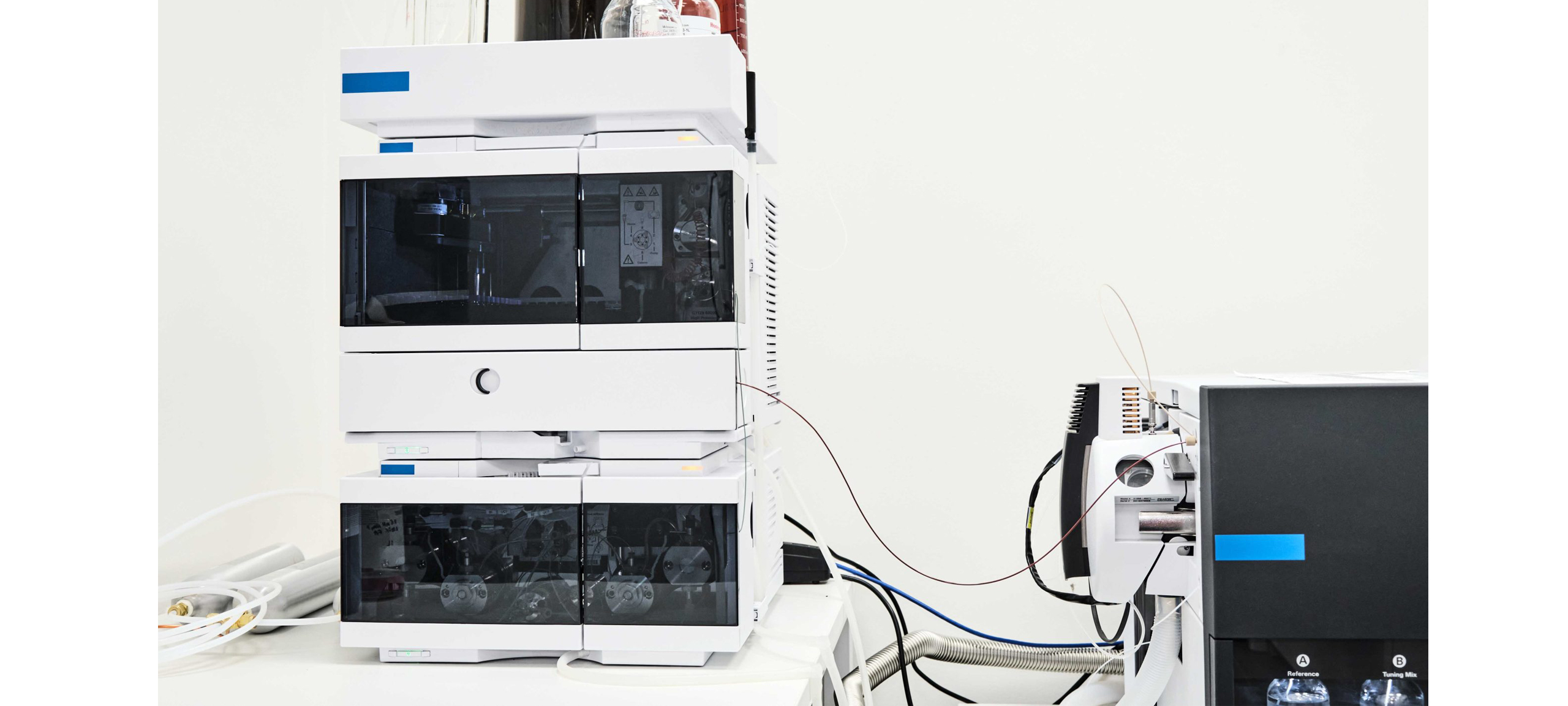
Why mass spectrometers require specialized power protection
Mass spectrometers are precision analytical instruments that combine high-voltage power supplies, RF electronics, sensitive data acquisition systems, and vacuum pumps — all of which are sensitive to power quality in different ways. Standard UPS protection addresses outages. Mass spectrometer protection requires addressing power quality as well.
- High-voltage power supplies for ion optics and detector systems
- RF electronics for ion trap and quadrupole control
- Precision analog circuits for signal acquisition
- Vacuum pump systems maintaining instrument pressure
- Digital data acquisition and control systems
- Voltage sags — interrupt high-voltage supplies and vacuum systems
- Harmonic distortion — affects precision analog measurement circuits
- Common mode noise — introduces measurement error in sensitive electronics
- Frequency variation — affects RF control systems
- Ground loops — create interference in low-level signal acquisition
Why an isolation transformer UPS is the laboratory standard
Standard online UPS systems protect against outages but do not eliminate common mode noise or ground-referenced electrical interference that can affect sensitive analytical measurements. An isolation transformer UPS adds a second layer of protection that addresses power quality as well as availability.
TX91 — Online double-conversion isolation UPS for laboratory applications
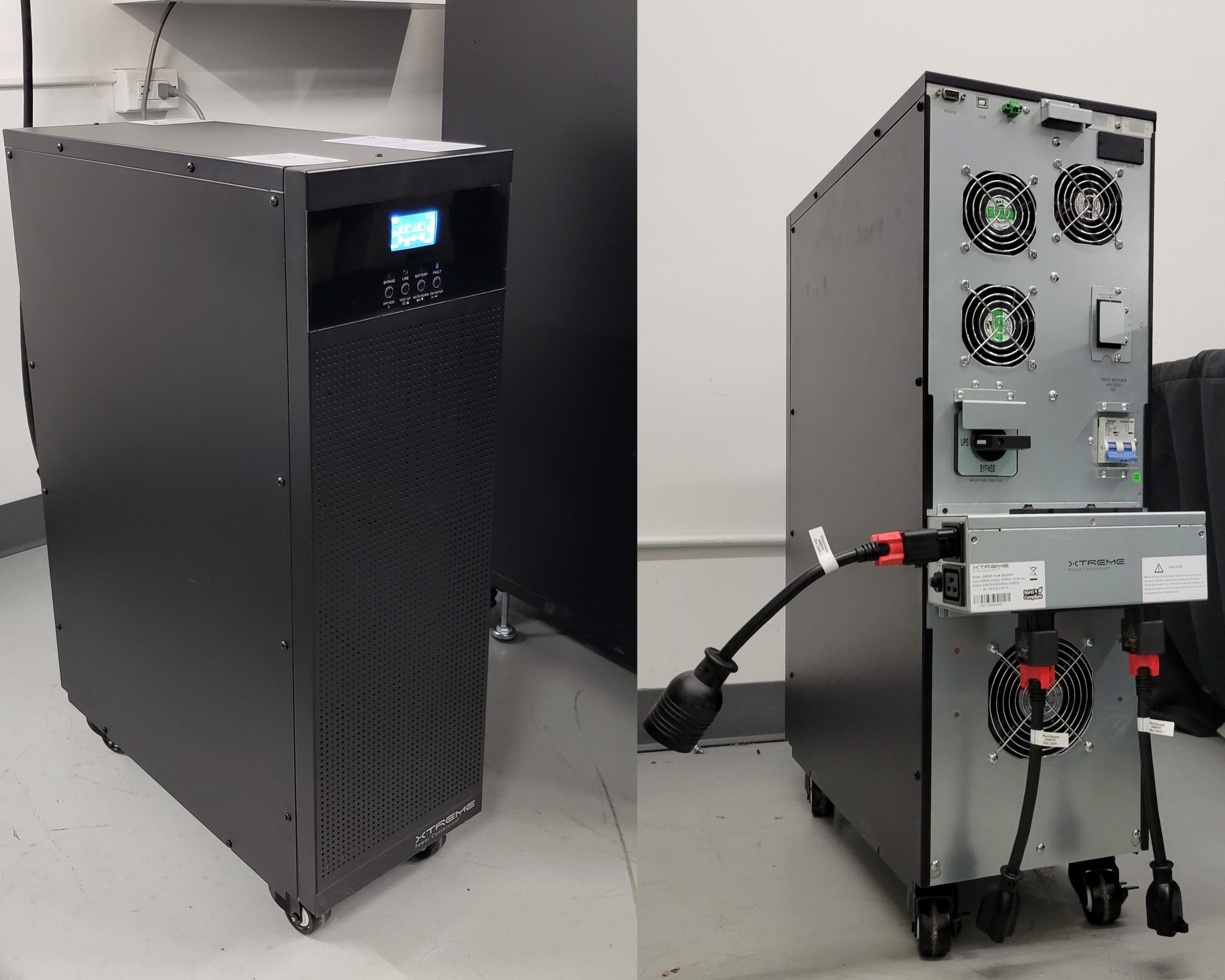
Online double-conversion UPS with integrated isolation transformer — purpose-built for laboratory and analytical instrument applications. The TX91 continuously regenerates output power through the isolation transformer, providing zero transfer time, continuous power conditioning, and galvanic separation from the utility source. The combined effect is a clean, stable, isolated power source for sensitive analytical electronics.
Available in rack or tower configuration. Multiple output voltage configurations support 120V, 208V, 220V, 230V, and 240V instruments. External battery cabinets available for extended runtime when shutdown procedures require additional time.
View TX91 → Compare →| Topology | Online double-conversion |
| Capacity | 3.8–10 kVA |
| Input voltage | 240V |
| Output voltage | 120V / 208V / 220V / 230V / 240V |
| Transfer time | Zero — continuous conversion |
| Isolation | Integrated transformer — galvanic separation |
| Battery | VRLA lead acid |
| Form factor | Tower or rack |
| Extended runtime | External battery cabinets available |
Mass spectrometry and analytical instrument applications
| Instrument type | Application environment | Power protection priority |
|---|---|---|
| LC-MS / LC-MS/MS | Pharmaceutical QC · bioanalysis · food safety | Isolation for analog signal integrity · runtime for controlled shutdown |
| GC-MS | Environmental testing · forensics · petrochemical | Isolation · stable voltage for detector circuits · vacuum pump runtime |
| ICP-MS | Elemental analysis · environmental · clinical | Zero transfer time · isolation · plasma stability |
| HPLC systems | Pharmaceutical · university research · clinical labs | Stable voltage · runtime for gradient completion or safe stop |
| Laboratory vacuum systems | Supporting all MS instruments | Runtime to maintain vacuum during controlled shutdown sequence |
Runtime strategy for laboratory UPS systems
Most analytical laboratories do not have dedicated generator backup. A laboratory UPS is typically sized to provide enough runtime for one of the following outcomes — not to run the instrument indefinitely on battery.
- Complete the current sample run — most MS runs are 5–20 minutes; runtime should comfortably exceed this
- Execute a controlled shutdown sequence — safely park the instrument, close vacuum systems, and save acquisition data
- Bridge short-duration utility events — momentary sags, switching transients, and brief outages that are common in laboratory buildings
- Prevent vacuum system loss — mass spectrometer vacuum pumps must run during shutdown to prevent atmospheric contamination
Use the UPS sizing tool to calculate required runtime based on your instrument’s actual load: UPS sizing tool →
Circuit and installation planning for laboratory UPS
Mass spectrometers may operate on 120V, 208V, or 240V circuits depending on instrument model and facility. The TX91’s selectable output voltage accommodates most configurations without custom wiring — but circuit capacity and plug compatibility should be verified before specification.
Key considerations: branch circuit capacity and the 80% continuous load rule, inrush current at instrument startup, available floor space for tower installation, and cable routing to the instrument. For circuit sizing guidance see the maximum UPS by circuit guide →
Common questions about UPS for mass spectrometers
Many mass spectrometers benefit significantly from an isolation transformer UPS. The isolation transformer eliminates common mode noise and galvanically separates the instrument from upstream electrical disturbances — improving measurement stability and repeatability. For pharmaceutical QC and other regulated laboratory environments, an isolation transformer UPS is considered best practice rather than optional.
Most single mass spectrometer installations with auxiliary equipment — HPLC pump, autosampler, data system — require a 3.8–10 kVA UPS. The TX91’s capacity range covers most single-instrument configurations. Actual sizing depends on instrument load, auxiliary equipment, and required runtime. Use the UPS sizing tool with your instrument’s nameplate wattage to confirm.
Yes. Common mode noise and harmonic distortion can interfere with sensitive analog circuits in mass spectrometer detectors and ion optics, potentially affecting signal-to-noise ratio and measurement repeatability. This is particularly relevant for trace-level analysis where the signal being measured is inherently small. An isolation transformer UPS addresses this at the power source level.
Yes for mass spectrometers. Online double-conversion continuously regenerates output power — the instrument never operates on raw utility power and there is zero transfer time during an outage. Line-interactive UPS systems have a transfer delay (typically 4–10ms) and pass utility power directly to the load during normal operation, which means power quality disturbances on the utility circuit reach the instrument. For precision analytical equipment, online double-conversion is the correct topology.
The TX91 accepts 240V input and provides selectable output voltages including 120V, 208V, 220V, 230V, and 240V — supporting most mass spectrometer models regardless of their power requirements. This flexibility eliminates the need for separate step-down transformers in laboratories with 240V facility distribution serving 120V or 208V instruments.
Speak with a laboratory power specialist
Load analysis, isolation requirements, runtime modeling, circuit compatibility review, and instrument-specific UPS sizing for mass spectrometry and analytical instrument deployments.