
M90S Scalable Infrastructure Power Platform
The Xtreme Power Conversion M90S defines a modern modular single-phase UPS architecture — engineered to support scalable infrastructure continuity across distributed and centralized electrical environments operating on split-phase power.
Designed for modernization strategies where lifecycle serviceability, phased capacity growth, and electrical-infrastructure constraints all have to be balanced, the M90S lets continuity systems evolve without disruptive replacement or a forced transition to three-phase distribution. Modular continuity architecture turns power protection into a scalable engineering framework aligned with real-world infrastructure growth.
Why modular single-phase architecture exists
Technology density keeps rising in environments historically served by distributed rack-level UPS systems — telecom aggregation nodes, distributed compute, broadcast facilities, clinical electrical support, and large residential technology deployments increasingly need structured continuity planning.
Legacy deployment models introduce structural limitations:
- Fixed-capacity systems require full replacement for growth
- Distributed UPS proliferation increases operational complexity
- Electrical-room constraints limit scalability
- Redundancy coordination becomes difficult
- Modernization initiatives require phased capital investment
Modular single-phase architecture lets continuity infrastructure scale predictably with operational requirements.
Split-phase infrastructure constraints
Many facilities run on 208/120V or 240/120V service where moving to three-phase distribution is impractical because of:
- Building electrical design limitations
- Service-upgrade cost and disruption
- Constrained electrical-room environments
- Distributed facility layouts
- Phased infrastructure modernization planning
The point: modular single-phase UPS platforms enable centralized continuity strategies without fundamental electrical-system reconstruction.
Centralized vs. distributed modular deployment
The M90S supports both centralized and distributed modular continuity strategies — and hybrids of the two.
- Aggregated protection across multiple critical loads
- Unified runtime and battery-lifecycle management
- Structured redundancy planning
- Simplified service workflows
- Improved electrical-room infrastructure density
- Localized continuity aggregation
- Phased infrastructure expansion
- Reduced initial deployment complexity
- Incremental modernization strategies
- Site-specific continuity design flexibility
Hybrid deployment models are common — particularly across distributed campus, telecom, and multi-building facility environments.
Standardized 6 kW modular blocks
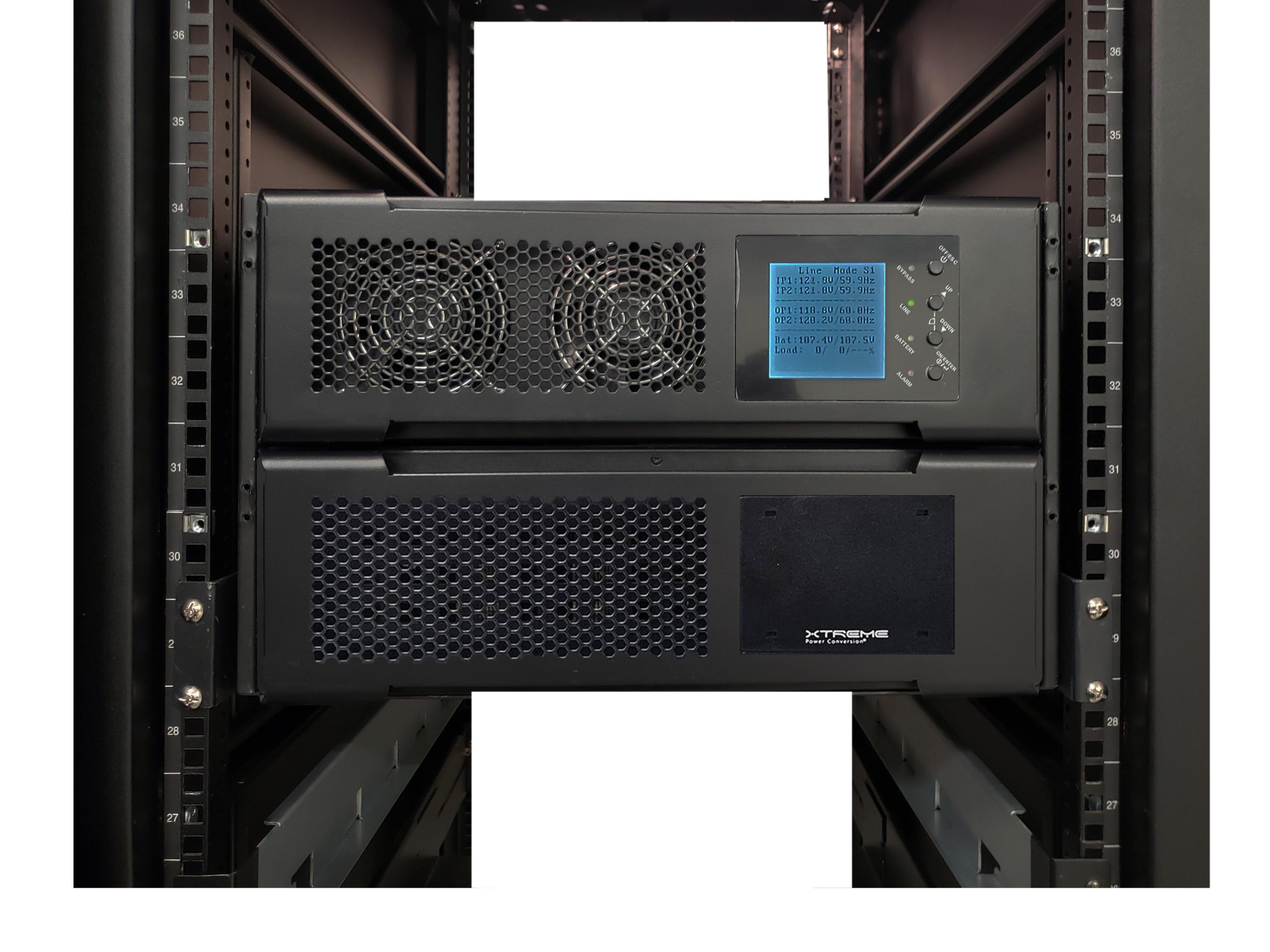
The M90S is built on standardized 6 kW modular power blocks, forming a scalable infrastructure continuity framework that supports:
- Predictable capacity expansion
- Subsystem-level lifecycle replacement
- Runtime-optimization flexibility
- Structured redundancy modeling
- Standardized service ecosystems
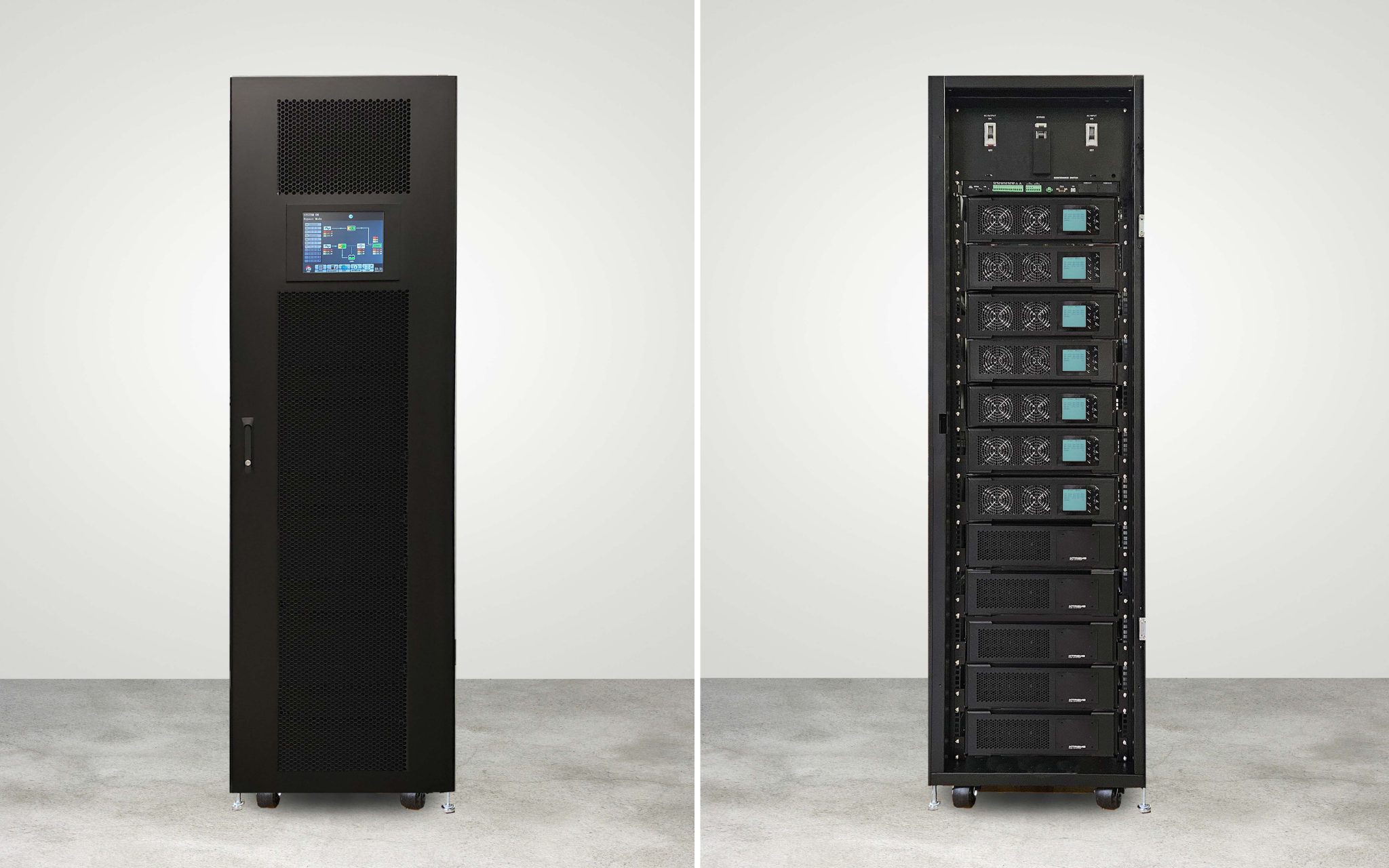
Universal modular slots. Planners dynamically allocate power and battery modules within a unified chassis. Operational integrity requires at least one active power module and at least one battery module.
What sets the M90S apart
Unity power factor utilization
The M90S delivers unity output power factor (1.0 PF), enabling full utilization of installed electrical capacity. Legacy modular platforms commonly run at reduced power factors (0.8–0.9), increasing oversizing risk and limiting usable wattage. Unity PF supports:
- Improved infrastructure-density planning
- Optimized continuity economics
- Reduced electrical-system oversizing
- Higher usable capacity per installed kVA
Integrated maintenance continuity
An integral maintenance-bypass framework enables service intervention without interruption to protected loads. This supports:
- Safe maintenance-isolation workflows
- Reduced service-disruption exposure
- Elimination of external bypass-panel dependency
- Simplified lifecycle service planning
- Improved centralized-infrastructure reliability
Single-phase vs. three-phase
- Facility electrical service remains split-phase
- Aggregated load density exceeds distributed-UPS practicality
- Phased infrastructure growth is required
- Modernization must avoid electrical reconstruction
- Infrastructure density exceeds practical single-phase aggregation limits
- Electrical-room design supports higher-capacity centralized continuity
- Enterprise-scale infrastructure expansion is anticipated
Need three-phase power? See the Xtreme Power M90C modular three-phase UPS.
Modular lifecycle modernization
Centralized modular UPS architecture enables structured modernization by supporting:
- Phased subsystem renewal instead of full system replacement
- Reduced operational-disruption risk
- Standardized spare-parts frameworks
- Predictable long-term capital planning
- Continuity-aligned maintenance methodologies
This lifecycle model aligns continuity infrastructure with contemporary facility-engineering practice.
The M90S modular tiers
A standardized framework that scales with infrastructure demand while maintaining platform consistency:
Plan with confidence
M90S modular UPS — frequently asked questions
What is the M90S?
How does the M90S scale capacity?
What is the difference between centralized and distributed M90S deployment?
Does the M90S support split-phase power?
When should I choose single-phase modular over three-phase?
Build continuity that scales with your facility
Define the modular continuity architecture aligned with your facility modernization strategy, infrastructure growth trajectory, and operational resilience objectives.