
UPS for network switches & routers
Network switches connect servers, wireless access points, security systems, and end-user devices across the enterprise. If power is interrupted, switches shut down immediately — disrupting communication between systems and causing network-wide outages. A UPS provides battery backup that keeps switches operational through power disturbances and outages, helping ensure availability and prevent disruption to critical services. UPS protection is commonly deployed across data centers, edge computing, IDF/MDF closets, retail and branch offices, and telecom rooms.
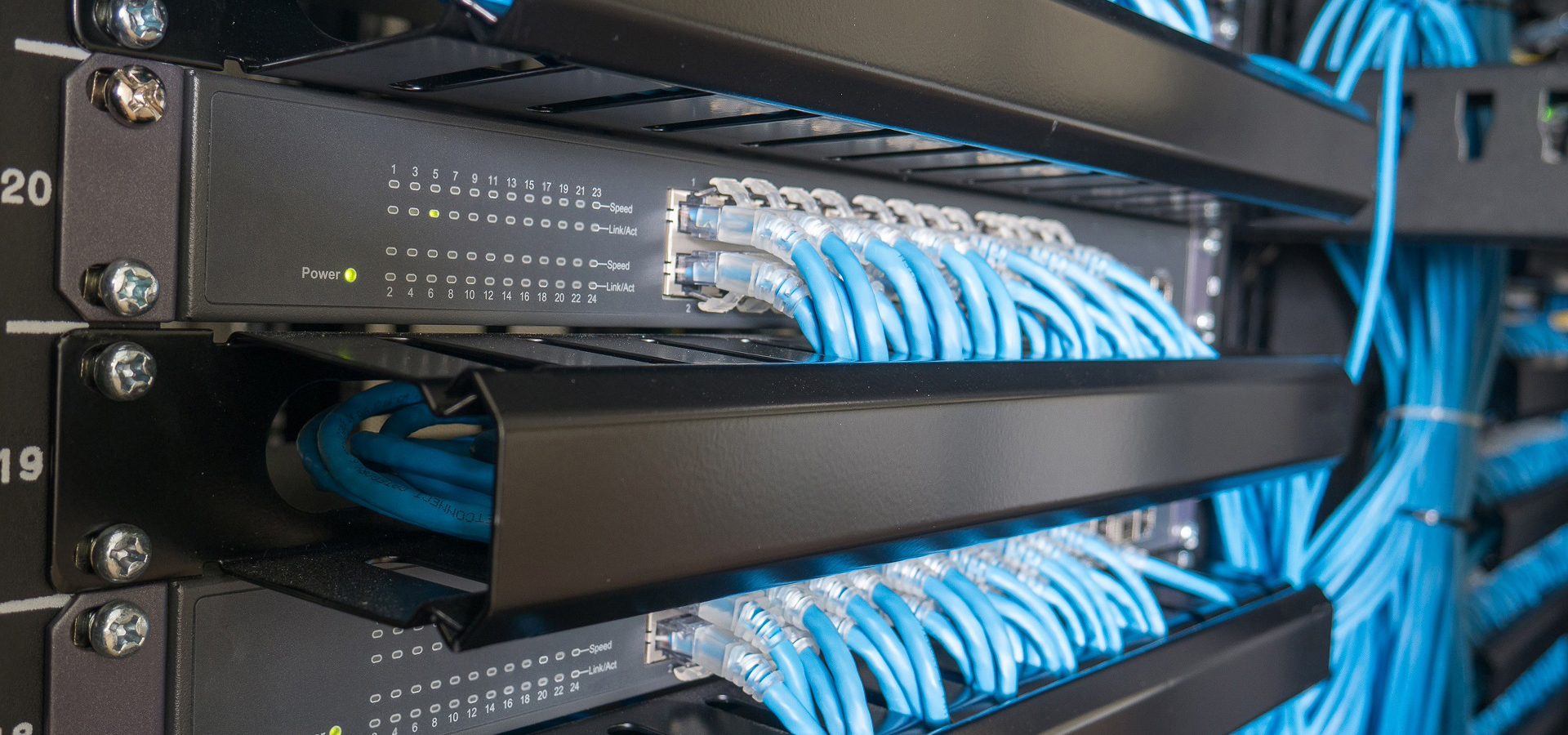
Structured cabling and switching in an MDF/IDF closet — the infrastructure a UPS keeps online through outages.
Why network switches require UPS protection
Modern networks depend on continuous switching to maintain communication between devices and applications. When a switch loses power, the connected devices it serves — and often powers over PoE — lose connectivity too. Typical equipment that should sit behind a UPS includes:
A UPS keeps switches running through short interruptions and provides time for a graceful shutdown during longer outages, protecting both the switch and everything downstream of it.
Protecting switch infrastructure isn’t like protecting a desktop
Switches often live in IDF/MDF closets, telecom cabinets, edge racks, and distributed infrastructure rooms — spaces with limited room, elevated temperatures, and limited maintenance access. A UPS built for an office desktop isn’t optimized for these conditions. Key considerations when selecting a UPS for network switches:
Lithium vs. traditional lead-acid
Traditional UPS platforms use valve-regulated lead-acid (VRLA) batteries, which need periodic replacement and have a limited lifespan in warmer environments. LiFePO₄ lithium systems change that math:
| Feature | Lead-acid UPS | Lithium UPS |
|---|---|---|
| Battery lifespan | 3–5 years | up to 15 years |
| Temperature tolerance | Moderate | Higher-temperature operation |
| Maintenance | Periodic battery replacement | Minimal maintenance |
| Lifecycle cost | Higher over time | Lower total cost of ownership |
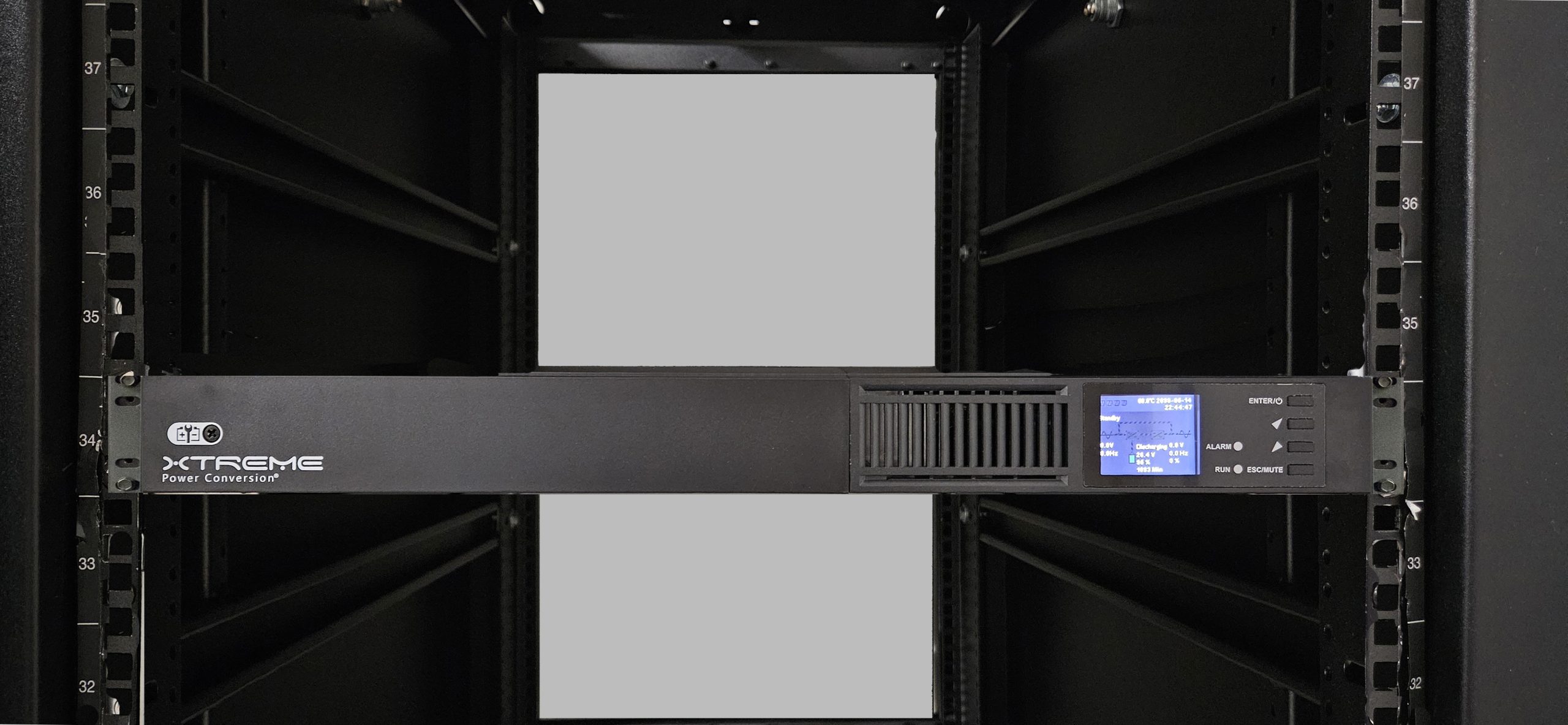
An Xtreme Power UPS integrated into a network rack to keep switches and routers online.
UPS platforms for network switching
350 / 600 VA · 120V or 230V · LiFePO₄ · up to 15-yr battery · shelf / wall / cabinet
Ultra-compact lithium UPS for small networking devices and distributed edge infrastructure.
- Small switches, access points, and edge networking
- Fanless, silent operation for closets and cabinets
- Long-life LFP battery chemistry
- 120V or 230V models
600 VA · 120V · LiFePO₄ · up to 15-yr battery · 1U rack / wall
Short-depth 1U lithium UPS for shallow network racks, wall-mount cabinets, and compact IDF enclosures.
- Short-depth 1U chassis fits shallow network racks
- Fanless operation for quiet network closets
- Long-life LFP battery chemistry
- 120V access and edge switches
600 VA · 208/230V · LiFePO₄ · up to 15-yr battery · 1U rack / wall
The 208/230V sibling of the J60C — short-depth lithium protection for higher-voltage shallow racks and international deployments.
- Short-depth 1U chassis for shallow 230V racks
- Higher-voltage 208/230V input
- Long-life LFP battery chemistry
- Fanless, low-maintenance operation
1000–3000 VA · 120V · LiFePO₄ · online double-conversion · up to 15-yr battery
Compact online rackmount lithium UPS for protecting network switches in IT racks and telecom environments.
- Online double-conversion for clean, continuous power
- Rack-mounted switches and IDF closet infrastructure
- Optional EBP48 extended battery packs scale runtime to many hours
- Outlet-level control for remote reboot
1000–3000 VA · 208/230V · LiFePO₄ · online double-conversion · up to 15-yr battery
Online lithium UPS protection for higher-voltage rack infrastructure operating at 208V or 230V.
- Online topology for enterprise and telecom racks
- Higher-voltage 208/230V switching infrastructure
- Optional EBP48 extended battery packs for long runtime
- Edge data-center environments
1–3 kVA · 120V · LiFePO₄ · online double-conversion · scalable runtime
Scalable online lithium UPS for network racks requiring higher capacity or longer runtime.
- Online double-conversion for larger network racks
- Scalable capacity and extended runtime
- Telecom infrastructure and distributed IT
- External battery options for long-duration backup
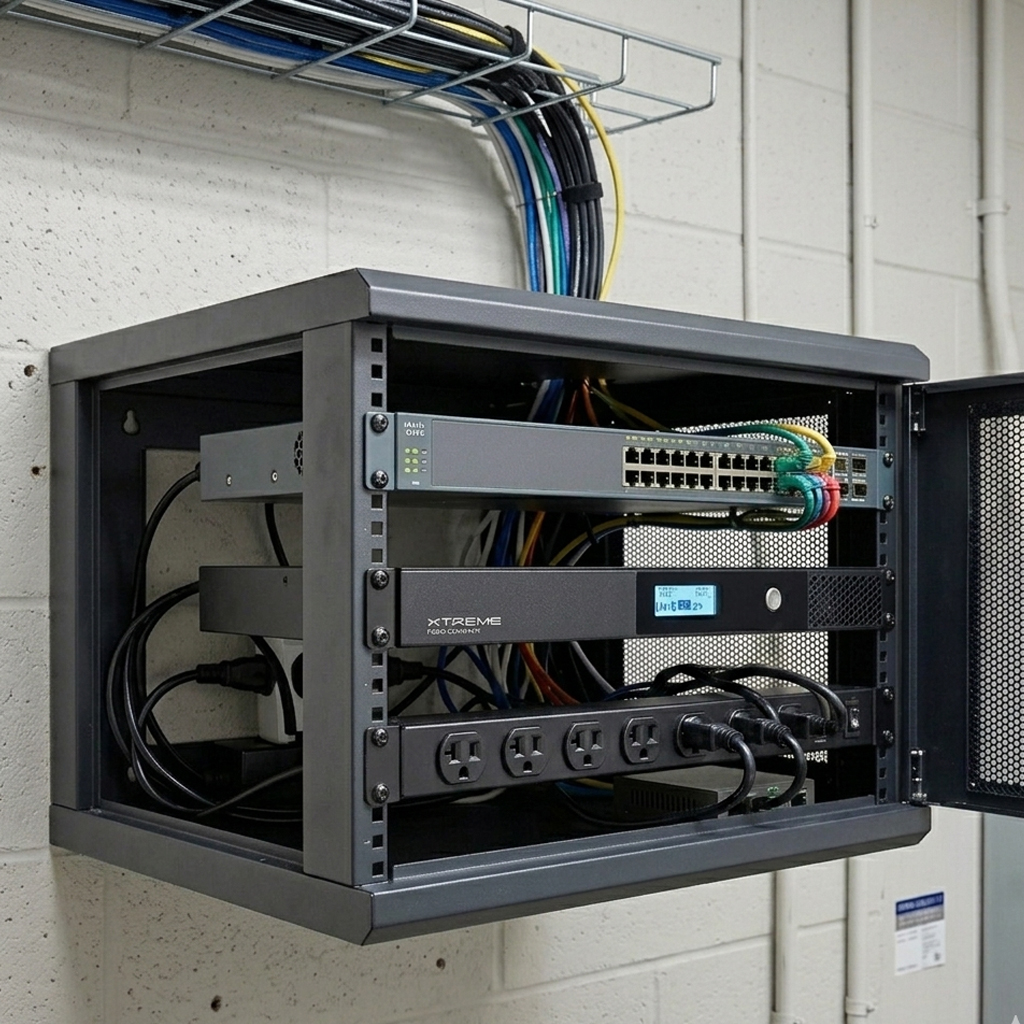
IDF wall rack — a UPS protecting a switch and PDU.

Enterprise rack — a UPS protecting network switches.
Network-switch UPS at a glance
| Model | Capacity | Voltage | Battery | Battery life | Topology | Best fit |
|---|---|---|---|---|---|---|
| J60 | 350 / 600 VA | 120V or 230V | LFP | up to 15 yr | Standby | Small switches, edge, telecom cabinets |
| J60C | 600 VA | 120V | LFP | up to 15 yr | Standby | Shallow racks, access & edge switches |
| J60Ci | 600 VA | 208/230V | LFP | up to 15 yr | Standby | Shallow 230V racks, access switches |
| J90 | 1000–3000 VA | 120V | LFP | up to 15 yr | Online | Rack switches, IDF closets, branch |
| J90i | 1000–3000 VA | 208/230V | LFP | up to 15 yr | Online | Enterprise & telecom racks, edge DC |
| P91Li | 1–3 kVA | 120V | LFP | up to 15 yr | Online | Larger racks needing capacity & runtime |
The J60 family uses natural-convection standby topology; the J90, J90i, and P91Li are online double-conversion. All lithium models carry LFP batteries rated up to 15 years.
Where network-switch UPS protection deploys
| Environment | Where it deploys |
|---|---|
| Enterprise networks | Core, aggregation, and access switching across campus infrastructure. |
| Retail & branch | Store networking and branch-office infrastructure. |
| Hospitality | Restaurant and hotel network closets. |
| Healthcare | Facility networks where uptime is essential. |
| Education | Campus distribution and classroom networking. |
| Edge & distributed IT | Network closets and edge infrastructure across sites. |
Deploying UPS protection for switches
A few guidelines keep switch-room UPS protection reliable over its service life:
Frequently asked questions
Do network switches need a UPS?
Yes. A switch loses power the instant an outage hits, dropping every connected device with it — including PoE-powered access points, phones, and cameras. A UPS keeps switching alive through disturbances and gives time for a graceful shutdown during longer outages.
How long will a UPS power a network switch?
Runtime depends on the load and battery capacity. A small switch on a J60 or J60C can run for many minutes on internal battery, while a J90 with EBP48 extended packs can keep a rack of switches online for hours. Sizing to the real load determines runtime.
What size UPS is required for a network switch?
Size to the switch’s power draw plus any PoE budget, with headroom for growth. A fully loaded 24-port PoE+ switch can draw several hundred watts once connected-device power is included, so plan around the total load — not just the switch itself.
Can one UPS power multiple switches?
Yes, as long as the combined load (including PoE) stays within the UPS capacity. Online platforms like the J90, J90i, and P91Li are built to protect several switches in a single rack.
Explore the network UPS cluster
Network applications
Deployment environments
Comparison resources
Match a UPS to your network infrastructure
Xtreme Power engineers can help you select the right UPS for network switches, routers, and distributed IT infrastructure. Contact our team for sizing, pricing, and deployment guidance.