
Commercial Desktop, POS, and Entry-Level Backup Power Alternatives
550–850 VA Standby UPS | Desktop & Wall-Mount Deployment
The Xtreme Power A60 family includes compact standby UPS systems designed for commercial desktop electronics, POS systems, peripherals, kiosks, and small IT devices. These deployments prioritize ease of installation, usable watt capacity, outlet flexibility, and predictable lifecycle performance.
This hub provides a centralized reference for evaluating A60 models against competitive desktop UPS platforms across commercial, education, retail, and regulated procurement environments.
UPS deployment planning by application:
https://xpcc.com/ups-by-application/
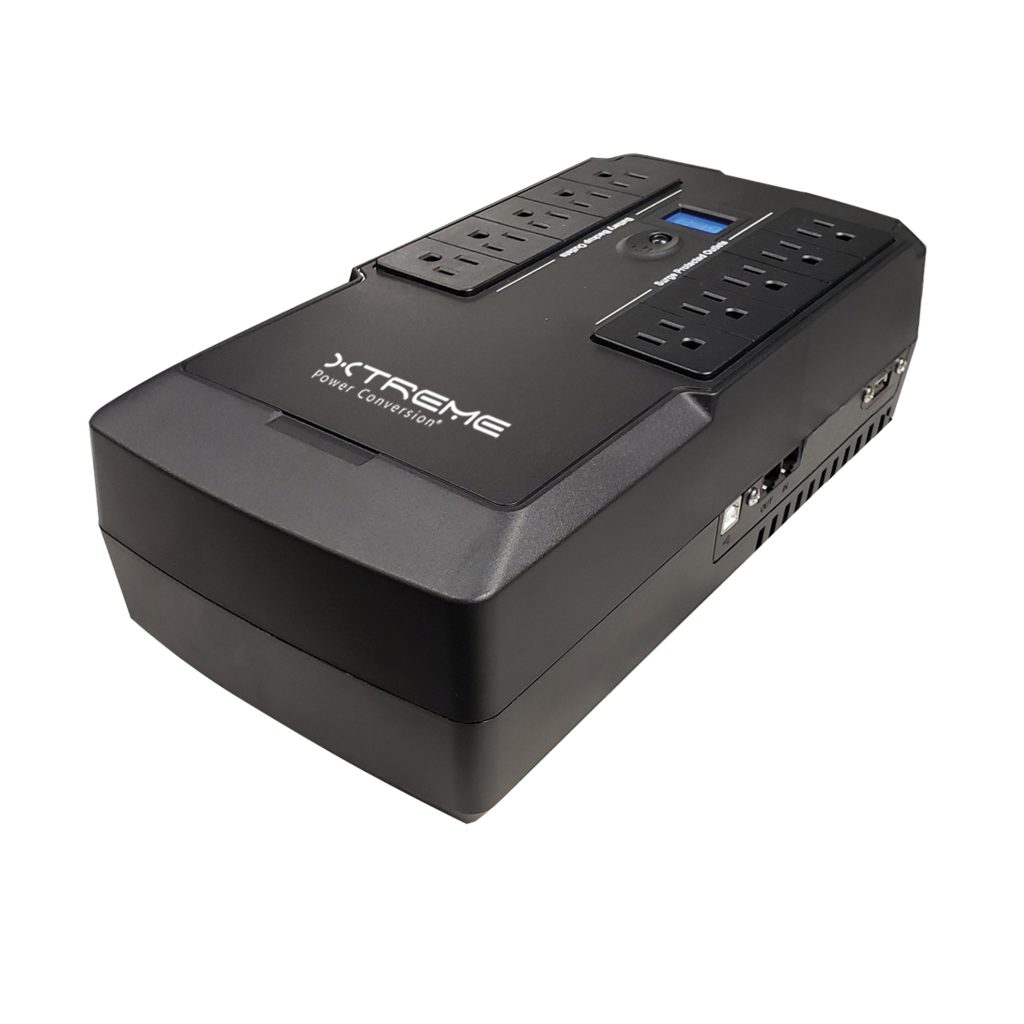
Commercial Desktop UPS Deployment Architecture
Standby UPS platforms are typically deployed where power protection requirements are straightforward and installation simplicity is essential. Typical environments include:
- desktop workstations
- retail POS terminals
- kiosks and unattended systems
- small office network equipment
- security control panels
- education and public-sector technology deployments
In these distributed environments, procurement factors such as TAA compliance, installation flexibility, and consistent outlet configuration often influence UPS selection.
Network infrastructure UPS planning guide:
https://xpcc.com/ups-for-network-infrastructure/
A60 Series Model Guide
| Model | Capacity | Typical Deployment |
| A60-550 | 550 VA | POS systems, desktop electronics, small peripherals |
| A60-850 | 850 VA | kiosks, desktop IT devices, small network equipment |
Key platform characteristics:
- standby UPS topology
- compact desktop or wall-mount design
- high usable watt capacity
- USB charging capability (selected models)
- TAA-compliant options available
- commercial-grade warranty coverage
Standby vs Line-Interactive Desktop UPS Selection
Engineers and procurement teams evaluating entry-level UPS platforms frequently compare standby UPS architecture with line-interactive designs.
Standby UPS platforms typically provide:
- simpler installation and operation
- lower system cost for small loads
- compact mechanical footprint
- reduced configuration complexity
- adequate protection for non-mission-critical equipment
Understanding topology differences helps ensure alignment between deployment requirements and UPS architecture.
Desktop Standby UPS Comparison Matrix
| UPS Platform | Topology | Capacity | Mounting | TAA Option | Detailed Comparison |
| Xtreme A60-550 | Standby | 550 VA | Desktop / Wall | Yes | — |
| Xtreme A60-850 | Standby | 850 VA | Desktop / Wall | Yes | — |
| APC Back-UPS BVN650M1 | Standby | 650 VA | Desktop | No | https://xpcc.com/a60-550-vs-apc-bvn650m1/ |
| CyberPower CP550SLG / SLGTAA | Standby | 550 VA | Desktop | Yes | https://xpcc.com/a60-550-vs-cyberpower-cp550slg/ |
| CyberPower EC850LCD | Standby | 850 VA | Desktop | Limited | https://xpcc.com/a60-850-vs-cyberpower-ec850lcd/ |
| Tripp Lite AVR550U | Line-Interactive | 550 VA | Desktop | Limited | https://xpcc.com/a60-550-vs-tripp-lite-avr550u/ |
| Tripp Lite ECO850LCD | Standby | 850 VA | Desktop | Limited | https://xpcc.com/a60-850-vs-tripp-lite-eco850lcd/ |
Specifications reflect typical deployment configurations based on publicly available manufacturer documentation.
Replacement Strategy for Legacy Desktop UPS Systems
Entry-level desktop UPS systems are often deployed in large distributed quantities across retail, education, and commercial environments. As these systems approach end-of-life, organizations frequently evaluate platforms that offer improved usability, procurement compliance, and deployment consistency.
Commercial-grade standby UPS systems can support:
- standardized deployment across distributed sites
- predictable warranty coverage
- simplified installation and replacement cycles
- improved procurement compliance for regulated projects
- consistent outlet configuration and device compatibility
When to Consider Higher-Performance UPS Architectures
While the A60 Series is optimized for desktop and entry-level commercial deployments, some applications may require higher-performance UPS architectures depending on environmental conditions, installation constraints, or protection requirements.
Industrial and Harsh Environment UPS
For industrial control panels, manufacturing equipment, or high-temperature environments:
J60 Industrial Lithium UPS
https://xpcc.com/products/j60/
Short-Depth Rack and Telecom Infrastructure
For shallow network cabinets, telecom racks, and distributed IT infrastructure:
J60C Short-Depth Rack Lithium UPS
https://xpcc.com/products/j60c/
Rackmount Online Double-Conversion UPS
For higher protection levels and enterprise rack deployments:
S71 Online Rack UPS
https://xpcc.com/products/s71/
A60 Competitive Comparison Navigation
APC Comparison
A60-550 vs APC Back-UPS BVN650M1
https://xpcc.com/a60-550-vs-apc-bvn650m1/
CyberPower Comparisons
A60-550 vs CyberPower CP550SLG / CP550SLGTAA
https://xpcc.com/a60-550-vs-cyberpower-cp550slg/
A60-850 vs CyberPower EC850LCD
https://xpcc.com/a60-850-vs-cyberpower-ec850lcd/
Tripp Lite Comparisons
A60-550 vs Tripp Lite AVR550U
https://xpcc.com/a60-550-vs-tripp-lite-avr550u/
A60-850 vs Tripp Lite ECO850LCD
https://xpcc.com/a60-850-vs-tripp-lite-eco850lcd/
Plan Desktop UPS Deployments with Confidence
Xtreme Power Conversion supports early product selection, procurement planning, and lifecycle deployment strategy for commercial desktop and distributed IT environments.
Phone: 800-582-4524
Email: sales@xpcc.com